
 Rock
Rock Aggregate
 Cement
 Concrete
 Soil
Soil Steel
Steel Bitumen/Asphalt
 Security Survey Equipment
 General Items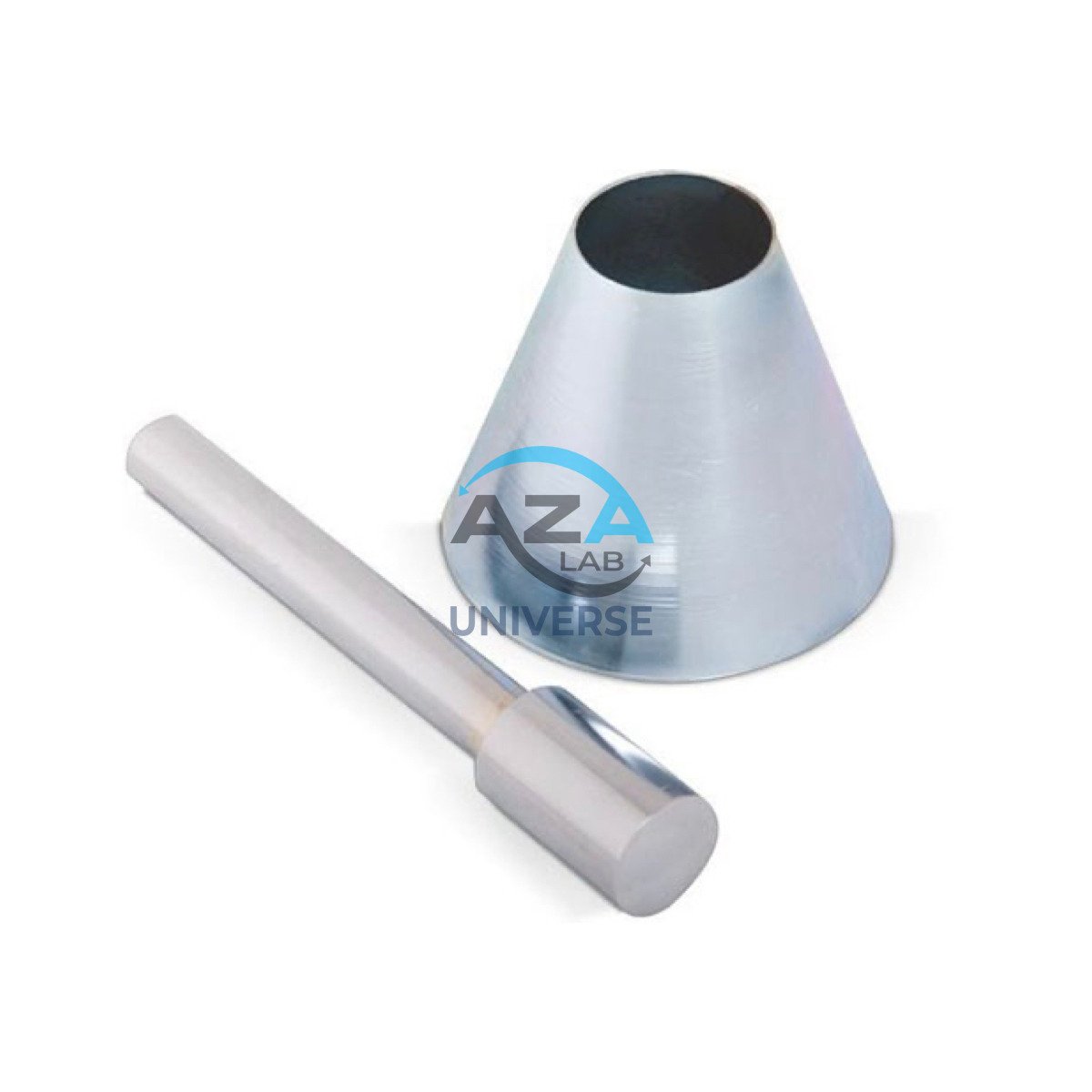
SAND ABSORPTION CONE AND TAMPER AZA1131
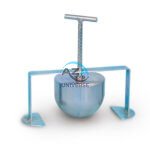
The Azalab Fine Aggregate Specific Gravity and Absorption Set AZA1131 is designed for determining bulk specific gravity, apparent specific gravity, and water absorption of fine aggregates in accordance with ASTM C128 and AASHTO T84. This set is widely used in concrete mix design, aggregate quality control, and academic laboratory training.
The equipment includes a precisely machined metal conical mould and a standard tamping rod, enabling accurate evaluation of the Saturated Surface Dry (SSD) condition through slump behavior—an essential step prior to calculating specific gravity and absorption. Built from corrosion-resistant metal, the set is durable, reliable, and suitable for continuous laboratory or field testing operations.
Key Features
- Complies with ASTM C128 and AASHTO T84
- Determines bulk & apparent specific gravity and absorption of fine aggregates
- Includes metal conical mould and standard tamping rod
- Provides accurate and consistent SSD slump measurements
- Durable, corrosion-resistant construction
- Ideal for construction QC labs, universities, RMC plants, and material testing centers
Description
Specifications
| Component | Details |
|---|---|
| Conical Mold Size | 1.5 in (top dia) × 3.5 in (base dia) × 2⅞ in (height) |
| Material | Heavy-duty, rust-resistant metal |
| Tamping Rod | 12 oz (340 g) metal rod with 1 in flat circular tamping face |
| Standards Met | ASTM C128, AASHTO T84 |
| Purpose | Bulk & apparent specific gravity and water absorption of fine aggregates |
| Application | Slump evaluation and SSD condition testing |
Applications
-
Concrete mix design validation
-
Fine aggregate quality control and comparison
-
Testing of natural sand, manufactured sand, and crushed fines
-
Use in construction materials laboratories
-
Academic and research institutions for training
Available Model
| Model No. | Description |
|---|---|
| AZA-FA128-01 | Fine Aggregate Absorption & Specific Gravity Set (ASTM C128 / T84) |
Frequently Asked Questions (FAQ)
Q1: What does this set test for?
It determines bulk specific gravity, apparent specific gravity, and water absorption of fine aggregates according to ASTM C128 and AASHTO T84.
Q2: What is the purpose of the conical mould in the SSD procedure?
The slump behavior observed from the mould helps identify when the fine aggregate reaches a Saturated Surface Dry (SSD) state.
Q3: Is the metal construction corrosion-resistant?
Yes. Both the mould and tamping rod are manufactured with rust-resistant materials for long service life.
Q4: Can individual components be purchased separately?
Yes. The mould or tamping rod can be supplied as standalone items upon request.
Q5: Is this suitable for field testing?
While primarily intended for laboratory environments, it can be used on-site where controlled testing conditions are available.
Related products

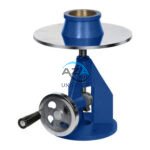
CONCRETE FLOW TABLE TEST SET AZA1110
AZA1110 Concrete Flow Table Test Set is a precision-engineered laboratory apparatus designed to determine the workability, consistency, and flow characteristics of fresh concrete. It is especially suitable for Self-Compacting Concrete (SCC), precast concrete, and high-consistency mixes where the traditional slump test is not effective.
This test set works by allowing a freshly mixed concrete sample to spread under controlled, repeated vertical jolts of a mechanically calibrated table. The final spread diameter of the concrete is measured to assess its flowability and uniformity.
Built with a rigid, precisely machined table surface, the AZA1110 ensures repeatable and reliable results. Its heavy-duty construction allows long-term use in demanding laboratory environments while remaining easy to clean, store, and maintain.
The apparatus complies with major international standards including IS 1199, ASTM C1437, and BS EN 12350-5, making it suitable for both domestic and international testing requirements.

INITIAL SURFACE ABSORPTION TEST (ISAT) APPARATUS AZA1108
AZA1108 ISAT Apparatus is a precision-engineered testing instrument designed to measure the Initial Surface Absorption of hardened concrete. This test is essential for evaluating the durability of concrete by determining how quickly water penetrates the surface under controlled conditions. The apparatus is widely used in civil engineering laboratories and quality control departments to assess permeability and long-term performance of concrete structures exposed to moisture.
Built with a high-accuracy capillary tube system, the AZA1108 maintains a constant water head over a defined test area and records the volume of water absorbed over specific time intervals — typically at 10, 30, and 60 minutes. The readings obtained help engineers understand the surface porosity of concrete, which is a critical indicator of resistance against weathering, chloride ingress, corrosion of reinforcement, and environmental deterioration.
Designed in compliance with BS 1881-208, this apparatus ensures reliable, repeatable, and standard-compliant results. Its sturdy, rust-proof construction and easy-to-use configuration make it ideal for both routine testing and advanced durability studies in construction material laboratories.

J-RING, NARROW GAP AZA1109
AZA1109 J-Ring – Narrow Gap is a precision testing apparatus designed to evaluate the passing ability of Self-Compacting Concrete (SCC) under highly restrictive conditions. This device simulates densely congested reinforcement zones by creating artificial obstructions that the fresh SCC must flow through without blocking or segregating. It is an essential tool for determining whether SCC mixes are suitable for heavily reinforced structural elements such as beams, columns, and shear walls.
The narrow gap design offers a more stringent test compared to standard J-Rings, allowing engineers and quality control professionals to accurately observe flow diameter, T50 flow time, and blocking behavior. When used in combination with a standard slump flow cone, AZA1109 provides reliable, repeatable results that help optimize mix designs and ensure consistent on-site performance.
Manufactured from durable, corrosion-resistant steel, the AZA1109 is built for repeated use in laboratory and field testing environments. The apparatus is fully compliant with ASTM C1621 and EFNARC guidelines, ensuring internationally accepted testing procedures.

K-SLUMP TESTER AZA1104
AZA1104 K-Slump Tester is a fast, reliable, and non-destructive testing device designed to measure the workability and consistency of fresh concrete directly at construction sites or in laboratory environments. It provides instant slump approximation without the need for traditional slump cones, base plates, or tamping rods, making it an essential tool for modern concrete quality control.
This handheld instrument is widely used by civil engineers, site technicians, and quality inspectors who require quick, repeatable, and real-time results during concrete batching, transportation, and placement. Its simple design eliminates complicated setup, reducing testing time and operator fatigue.
Manufactured from high-grade stainless steel, the probe is corrosion-resistant and suitable for harsh site conditions. The etched scale markings provide direct readings in millimeters or inches, allowing accurate penetration depth measurement without additional instruments.
Unlike traditional slump testing methods, the AZA1104 enables non-destructive testing, meaning the concrete surface remains intact and usable after testing. This feature is especially useful when multiple checks are needed during large pours or continuous batching operation
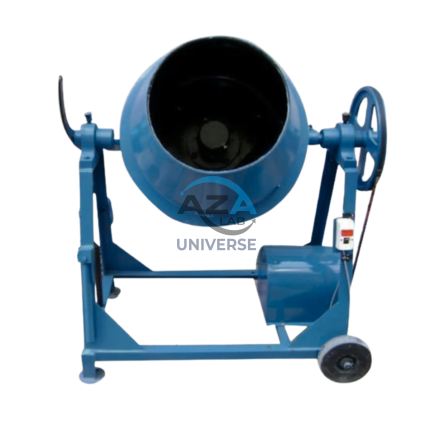
LABORATORY CONCRETE MIXER (MOTORISED) AZA1116
Key Features
- Motorised operation for consistent and uniform mixing
- Ideal for laboratory-scale concrete preparation
- Durable drum crafted from mild steel or stainless steel
- Heavy-duty induction motor for long, reliable service life
- Stable, rigid frame designed for lab environments
- User-friendly controls with built-in safety features
- Reduced manual effort and improved batch repeatability
- Suitable for QC labs, R&D facilities, and educational institutions
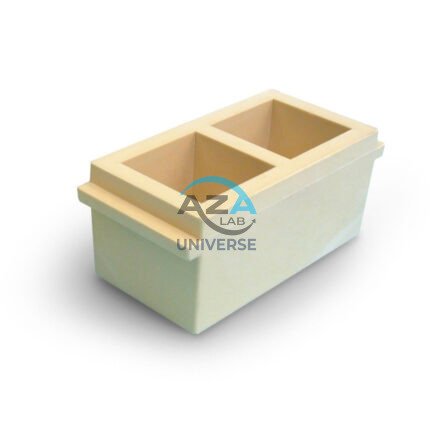
PLASTIC CUBE MOULD AZA1126
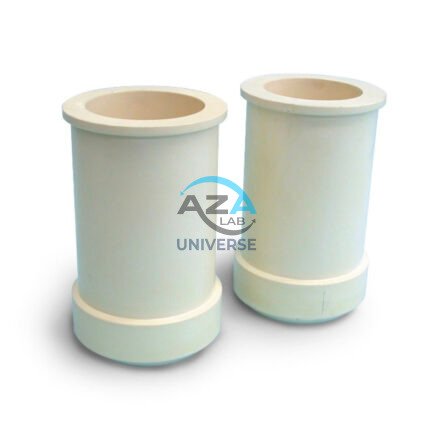
PLASTIC CYLINDERICAL MOULD AZA1127
| Model No. | Size | Material | Weight |
|---|---|---|---|
| AZA 1127 A | 150 mm × 300 mm | Polyurethane | 1.65 kg |
| AZA 1127 B | 100 mm × 200 mm | Polyurethane | 0.90 kg |

SLUMP CONE, PLASTIC AZA1103
AZA1103 Slump Cone (Plastic) is a durable and lightweight testing tool designed for accurate measurement of concrete workability and consistency. It is widely used in construction sites, civil engineering laboratories, and quality control departments for fast and reliable slump testing of fresh concrete mixes.
Unlike traditional metal cones, this model is manufactured from high-quality rigid plastic, making it corrosion-resistant, dent-proof, and highly suitable for repeated field and laboratory use. Its lightweight construction makes it easy to transport and ideal for site engineers and mobile testing teams.
The apparatus is manufactured to standard dimensions and fully complies with IS 1199 and ASTM C143, ensuring accurate and repeatable test results. The smooth internal surface minimizes friction, allowing easy release of concrete and improving measurement accuracy.
This slump cone helps engineers quickly determine if a concrete mix has the correct consistency for placement, compaction, and finishing. It is especially useful for quality checks before concrete pouring to avoid honeycombing, segregation, or improper flow.
AZA1103 is reusable, easy to clean, and requires minimal maintenance, making it a long-lasting and cost-effective solution for routine concrete testing.