
 Rock
Rock Aggregate
 Cement
 Concrete
 Soil
Soil Steel
Steel Bitumen/Asphalt
 Security Survey Equipment
 General Items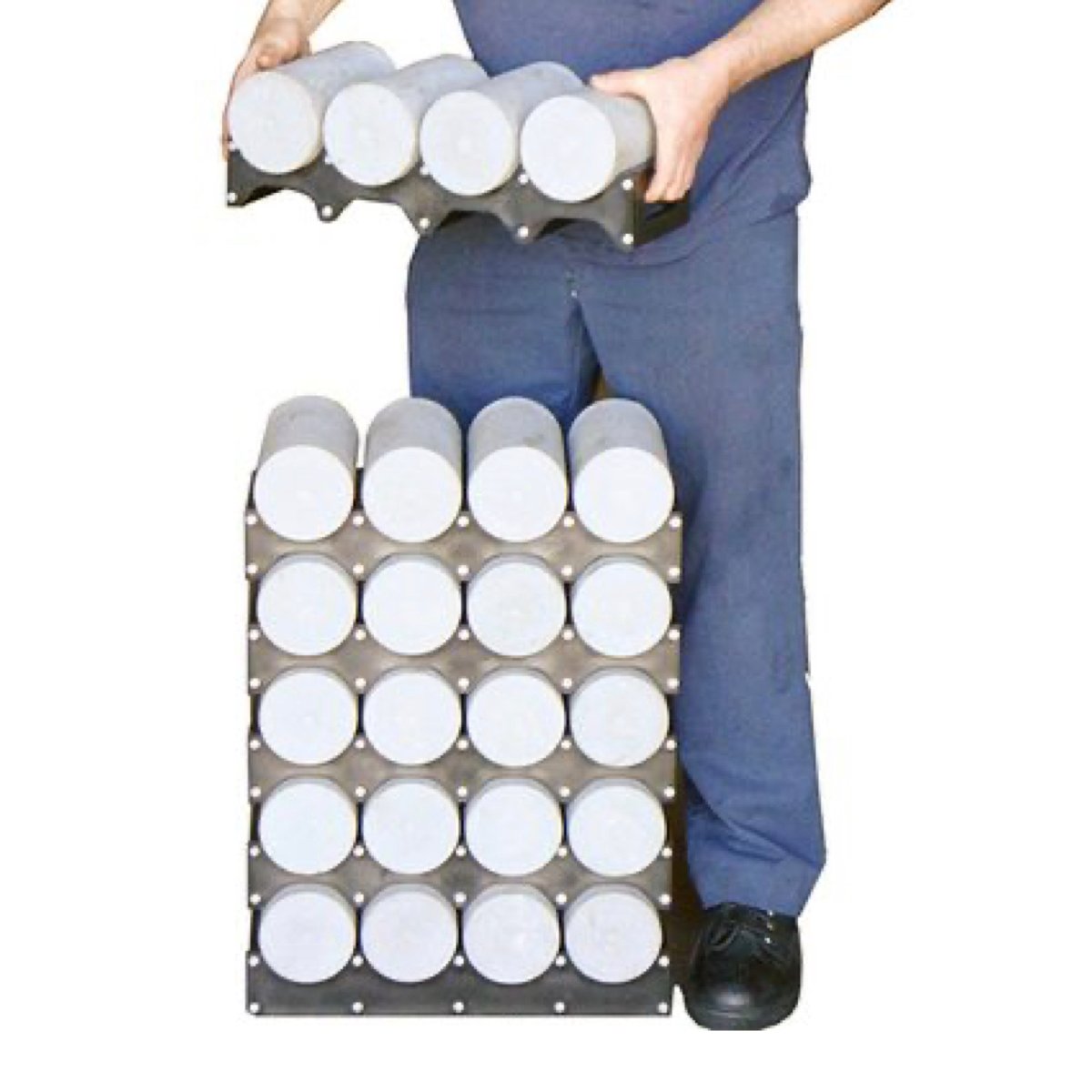
CONCRETE CURING RACKS AZA1157
The AZA-LAB Concrete Curing Rack (Model AZA1157) is a heavy-duty storage solution designed for organized, efficient, and standardized curing of concrete cube specimens. Constructed from high-strength galvanized or powder-coated steel, this rack ensures long service life, superior load-bearing capability, and full resistance to corrosion even in wet and humid curing environments.
Engineered for professional material testing laboratories, construction quality control units, and precast manufacturing facilities, the AZA1157 rack provides optimized storage for 100 mm and 150 mm cube moulds. With a multi-level, space-saving design, the rack supports consistent curing practices in accordance with IS 516 and ASTM C31 standards.
Each shelf is built to withstand the weight of freshly cast concrete without deformation, while the open-frame design promotes uniform airflow and minimizes external contamination. Optional wheels, trays, and locking systems enhance mobility and usability, making the AZA1157 a versatile solution for both stationary and mobile lab setups.
Description
Key Features
• Heavy-duty steel construction for long-term durability
• Rust-resistant powder-coated or galvanized finish
• Supports 3–4 cube moulds per shelf (100 mm / 150 mm)
• Available in 5 to 10 shelf configurations
• Stackable, modular design for maximum space utilization
• Optional wheels with locking brakes for mobility
• Suitable for curing rooms, water tanks, and controlled chambers
• Ideal for high-throughput concrete testing environments
• Compliant with IS 516 and ASTM C31
Technical Specifications
| Parameter | Value |
|---|---|
| Product Type | Concrete Curing Rack |
| Model | AZA1157 |
| Material | Galvanized or powder-coated steel |
| Capacity per Shelf | 3–4 cube moulds |
| Total Shelf Levels | 5–10 (model dependent) |
| Compatible Mould Sizes | 100 mm, 150 mm |
| Surface Finish | Rust-resistant industrial coating |
| Optional Features | Wheels, trays, locking mechanism |
| Applications | Concrete curing, specimen storage |
| Compliance | IS 516, ASTM C31 |
Applications
• Civil engineering and construction QA/QC laboratories
• Government and third-party testing labs
• Precast concrete factories
• Research institutions and training centers
• High-volume concrete testing environments
Frequently Asked Questions (FAQ)
Q1. What cube mould sizes are supported?
100 mm and 150 mm standard cube moulds.
Q2. Is it suitable for water curing tanks?
Yes. The rust-resistant coating supports usage in wet environments.
Q3. Are wheels available?
Yes, optional castor wheels with locking brakes can be provided.
Q4. What is the total capacity?
Depending on the model, one rack can hold approximately 15–40 cubes.
Q5. Can the rack be used for cylinders?
No, this model is optimized for cube moulds. Cylinder storage racks are supplied separately.
Additional information
| Product Type |
Concrete Curing Rack |
|---|---|
| Material |
Galvanized or powder-coated steel |
| Capacity per Shelf |
3–4 cube moulds (150mm or 100mm) |
| Total Shelf Levels |
5–10 (based on model) |
You may also like…


Related products
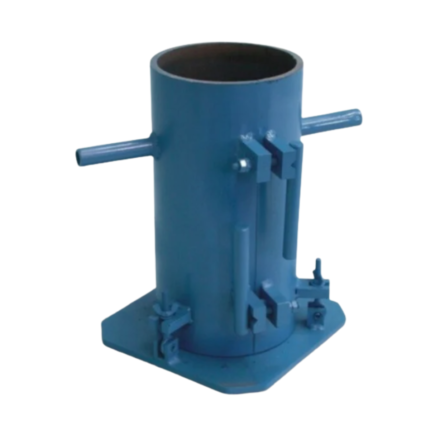
CYLINDRICAL MOULD AZA1123
Purpose & Function
The cylindrical mould is used to prepare concrete specimens of standard dimensions, typically:- 150 mm diameter × 300 mm height
- 100 mm diameter × 200 mm height
- Compressive strength tests
- Split tensile strength tests
- Elastic modulus evaluations
- Durability and material behavior studies

J-RING, NARROW GAP AZA1109
AZA1109 J-Ring – Narrow Gap is a precision testing apparatus designed to evaluate the passing ability of Self-Compacting Concrete (SCC) under highly restrictive conditions. This device simulates densely congested reinforcement zones by creating artificial obstructions that the fresh SCC must flow through without blocking or segregating. It is an essential tool for determining whether SCC mixes are suitable for heavily reinforced structural elements such as beams, columns, and shear walls.
The narrow gap design offers a more stringent test compared to standard J-Rings, allowing engineers and quality control professionals to accurately observe flow diameter, T50 flow time, and blocking behavior. When used in combination with a standard slump flow cone, AZA1109 provides reliable, repeatable results that help optimize mix designs and ensure consistent on-site performance.
Manufactured from durable, corrosion-resistant steel, the AZA1109 is built for repeated use in laboratory and field testing environments. The apparatus is fully compliant with ASTM C1621 and EFNARC guidelines, ensuring internationally accepted testing procedures.
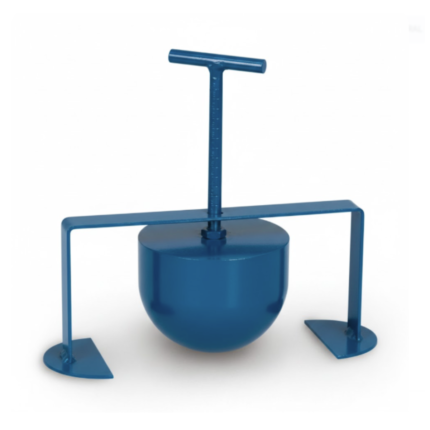
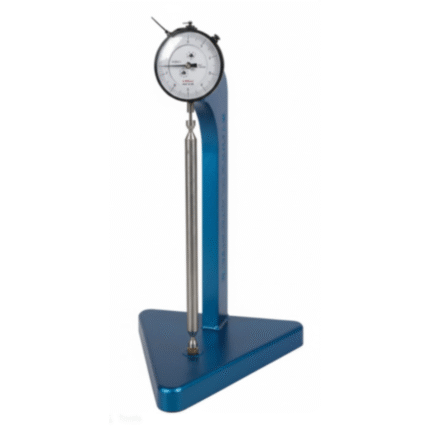
KELLEY BALL PENETRATION APPARATUS AZA1106
- Direct workability assessment using steel ball penetration
- Fully compliant with ASTM C360
- Portable and rugged for field and lab testing
- Heavy-duty steel/aluminum frame for long-term durability
- Built-in scale for accurate depth measurement
- Simple setup and low maintenance
- Provides a reliable alternative to the slump test
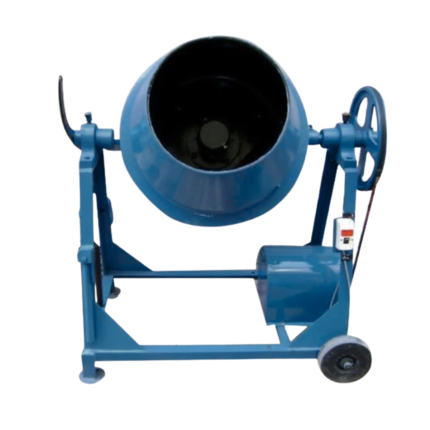
LABORATORY CONCRETE MIXER (MOTORISED) AZA1116
Key Features
- Motorised operation for consistent and uniform mixing
- Ideal for laboratory-scale concrete preparation
- Durable drum crafted from mild steel or stainless steel
- Heavy-duty induction motor for long, reliable service life
- Stable, rigid frame designed for lab environments
- User-friendly controls with built-in safety features
- Reduced manual effort and improved batch repeatability
- Suitable for QC labs, R&D facilities, and educational institutions
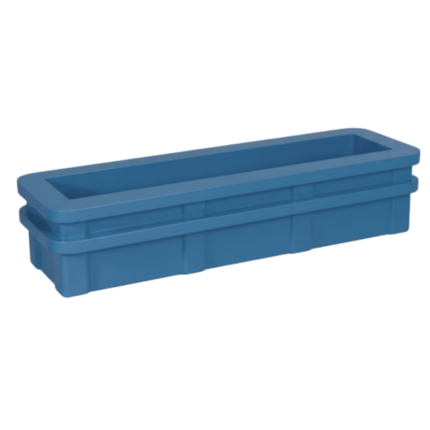
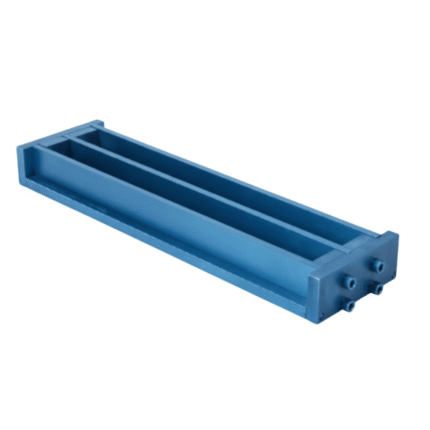
PLASTIC BEAM MOULD AZA1128
The Azalab AZA1128 Polyurethane Beam Mould Series is engineered for casting concrete beam specimens used in flexural strength tests. Built from high-impact, shock-absorbing polyurethane, these moulds deliver exceptional durability, dimensional accuracy, and ease of handling. Their lightweight yet robust design makes them suitable for both laboratory and field applications.
Polyurethane offers superior resilience compared to traditional metal or rigid plastic alternatives, enabling these moulds to withstand vibration, repeated use, and environmental exposure. The smooth internal finish ensures clean, damage-free demoulding, while the mould structure maintains consistency across multiple cycles.
Each AZA1128 mould complies with IS 516, ASTM C78, and BS 1881, ensuring reliable and standardized test preparation.
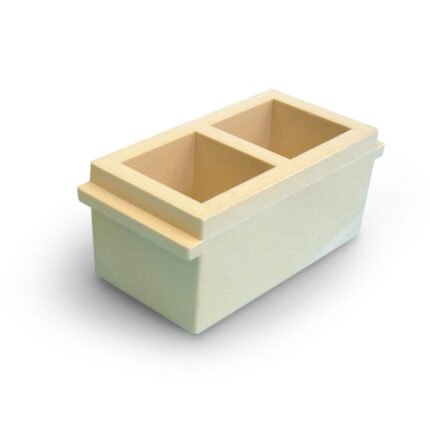
PLASTIC CUBE MOULD AZA1126
PLASTIC CYLINDERICAL MOULD AZA1127
| Model No. | Size | Material | Weight |
|---|---|---|---|
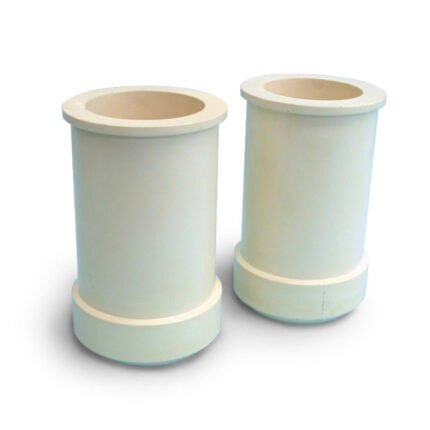
| AZA 1127 A | 150 mm × 300 mm | Polyurethane | 1.65 kg |
| AZA 1127 B | 100 mm × 200 mm | Polyurethane | 0.90 kg |
VEE BEE CONSISTOMETER AZA1101
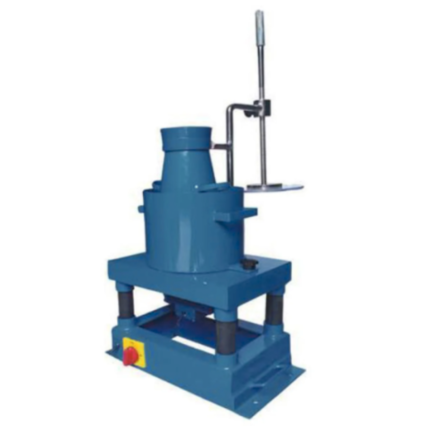
AZA1101 Vee Bee Consistometer is a laboratory-grade concrete testing instrument designed for measuring the workability of stiff and low-slump concrete mixes with high accuracy. It is widely used in construction material testing laboratories, civil engineering institutes, infrastructure projects, and quality control departments.
This equipment performs both slump test and Vee Bee time test, providing dual accuracy in concrete consistency evaluation. It is especially ideal for testing dry, roller-compacted concrete and pavement concrete mixes, where traditional slump tests alone are not sufficient.
The unit is equipped with a precision vibrating table that ensures uniform vibration and repeatable testing results. It comes as a complete set including a standard slump cone, transparent cylindrical container, graduated rod with metal disc, and a powerful vibration unit.
Manufactured from heavy-duty, powder-coated steel, the AZA1101 offers excellent durability and stable performance even under continuous laboratory use. The apparatus is designed and built in compliance with IS 1199 and ASTM C1170 standards, ensuring reliable, repeatable, and internationally accepted test results.
Its easy-to-use design, low maintenance requirement, and robust construction make the AZA1101 a dependable solution for professionals involved in construction material testing and concrete quality control.