
 Rock
Rock Aggregate
 Cement
 Concrete
 Soil
Soil Steel
Steel Bitumen/Asphalt
 Security Survey Equipment
 General Items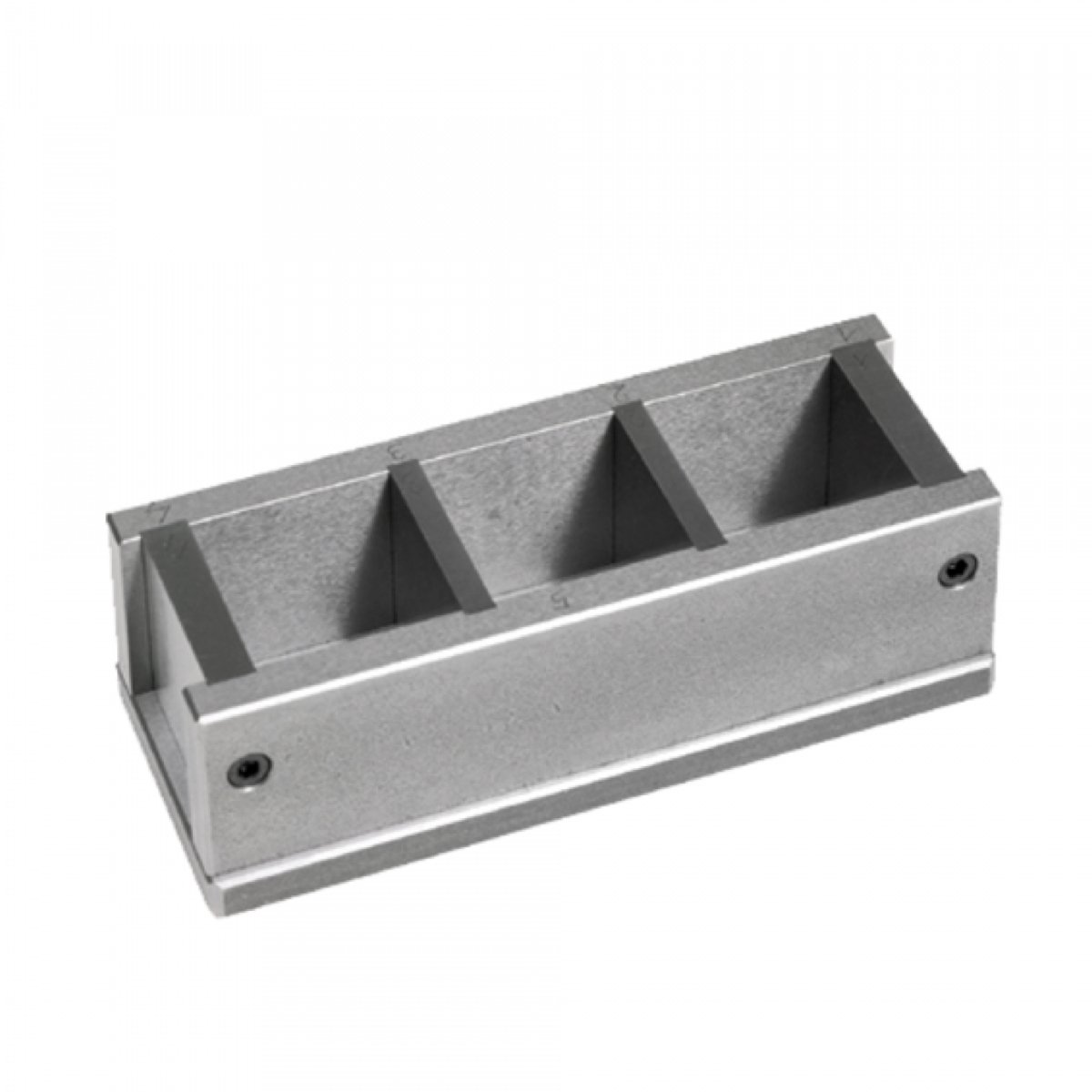
PLASTIC CUBE MOULD (THREE GANG) AZA1156
The AZA-LAB Three-Gang Plastic Cube Mould AZA1156 is engineered for casting three standard 150 mm concrete cubes in a single operation. This design significantly improves productivity in concrete testing environments by reducing preparation time and ensuring uniformity across multiple specimens from the same concrete batch.
Manufactured from high-density, industrial-grade plastic, the mould offers a lightweight, corrosion-free alternative to traditional metal moulds while maintaining exceptional dimensional accuracy and durability. The rigid structure prevents deformation during concrete pouring and compaction, ensuring precise cube formation suitable for compressive strength testing.
Each of the three chambers forms an independent 150 mm × 150 mm × 150 mm cube. Casting all three cubes simultaneously ensures identical curing conditions, which is essential for reliable statistical evaluation in concrete quality control.
The mould features detachable, easy-to-align panels that create a leakproof assembly. Its smooth, non-stick interior surface enables effortless demoulding without the need for lubrication, although a light release agent may be used to achieve an enhanced finish. Cleaning is simple—requiring only water or mild detergent—and the mould dries quickly without rust or deformation.
The AZA1156 complies with IS 516 and relevant ASTM principles (ASTM C39) for compressive strength specimen preparation, making it suitable for material testing laboratories, construction QC stations, ready-mix plants, and academic institutions.
Description
Key Features
-
Three-gang design casts 3 cubes simultaneously
-
Standard 150 mm × 150 mm × 150 mm cube size
-
Lightweight, corrosion-resistant high-density plastic
-
Rigid structure ensures dimensional stability
-
Smooth internal surface for quick, hassle-free demoulding
-
Easy-to-assemble detachable walls for leakproof casting
-
Ideal for high-volume testing environments
-
Compatible with manual and vibratory compaction
-
Long service life with minimal maintenance
-
Complies with IS 516 and relevant ASTM testing criteria
Technical Specifications
| Parameter | Value |
|---|---|
| Model No. | AZA1156 |
| Mould Type | Three-Gang Cube Mould (Plastic) |
| Internal Dimensions | 3 × (150 mm × 150 mm × 150 mm) |
| Material | High-density, durable plastic |
| No. of Cubes | 3 |
| Usage | Reusable; suitable for lab and field |
| Compaction | Manual or vibratory |
| Cleaning | Water-washable |
| Standards Compliance | IS 516, ASTM C39 |
| Weight | Lightweight, portable |
| Application | Concrete compressive strength testing |
Applications
-
Casting multiple cubes for compressive strength tests
-
Quality control at construction sites and ready-mix plants
-
Research and academic material testing laboratories
-
Field and on-site rapid cube preparation
-
High-volume testing workflows requiring consistent specimens
Available SKU
| Model No. | Description |
|---|---|
| AZA1156 | Plastic Cube Mould – Three Gang (150 mm × 150 mm × 150 mm) |
Frequently Asked Questions (FAQ)
Q1. What is the main advantage of the three-gang mould?
It allows casting of three cubes at once, improving efficiency and ensuring identical curing conditions.
Q2. Are the cube sizes standard?
Yes. Each mould chamber forms a standard 150 mm × 150 mm × 150 mm cube.
Q3. Can the mould be reused?
Yes. It is designed for long-term, repeated use in laboratories and field environments.
Q4. Do I need a release agent?
Not required, but a light release agent can further ease demoulding.
Q5. Is the material suitable for outdoor use?
Yes. The rugged plastic is corrosion-resistant and suitable for on-site conditions.
Additional information
| Mould Type |
Three Gang Cube Mould (Plastic) |
|---|---|
| Internal Dimensions |
3 × (150 mm × 150 mm × 150 mm) |
| Material |
High-density plastic |
| No. of Cubes Cast |
3 |
You may also like…


Related products
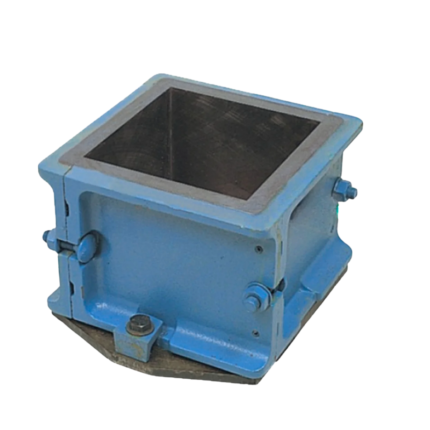
CUBE MOULD (METAL) AZA1122
Purpose & Function
This mould supports the preparation of standardized cube specimens that are used in:- Compressive strength testing
- Batch-wise quality control in construction
- Concrete mix design validation
- Research on material performance and durability
CYLINDRICAL MOULD AZA1123
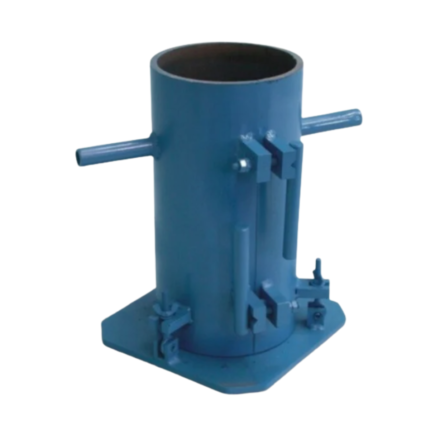
Purpose & Function
The cylindrical mould is used to prepare concrete specimens of standard dimensions, typically:- 150 mm diameter × 300 mm height
- 100 mm diameter × 200 mm height
- Compressive strength tests
- Split tensile strength tests
- Elastic modulus evaluations
- Durability and material behavior studies
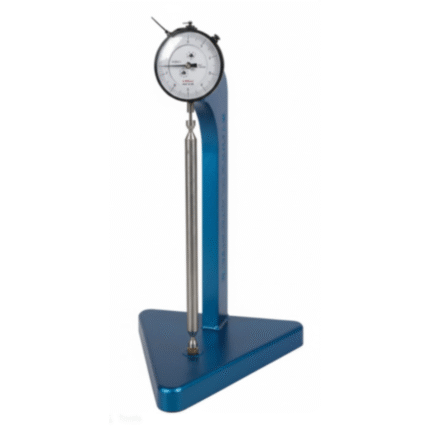
KELLEY BALL PENETRATION APPARATUS AZA1106
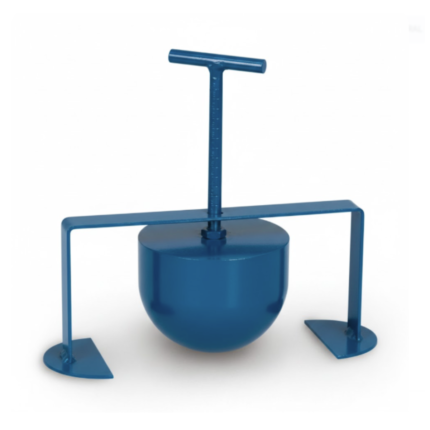
- Direct workability assessment using steel ball penetration
- Fully compliant with ASTM C360
- Portable and rugged for field and lab testing
- Heavy-duty steel/aluminum frame for long-term durability
- Built-in scale for accurate depth measurement
- Simple setup and low maintenance
- Provides a reliable alternative to the slump test

L SHAPE BOX APPARATUS AZA1112
AZA1112 L Shape Box Apparatus is a precision testing device designed to evaluate the passing ability and flow performance of Self-Compacting Concrete (SCC) in congested reinforcement conditions. This apparatus simulates real-world scenarios such as densely reinforced beams, columns, tunnels, and bridge segments, where concrete must flow freely without segregation or blockage.
The distinctive L-shaped design creates a controlled flow path where freshly mixed SCC moves from a vertical chamber into a horizontal channel containing reinforcement bars. By measuring the concrete heights at both ends (H1 and H2), the H2/H1 ratio is calculated, providing a direct, quantitative assessment of the concrete’s ability to pass through obstructions.
Manufactured from durable, corrosion-resistant steel, AZA1112 is built for long-term laboratory and site use. It conforms to EN 12350-10 and EFNARC guidelines, ensuring global acceptance of test results.
MOULD VERIFICATION KIT – PRECISION QC TOOL AZA1121
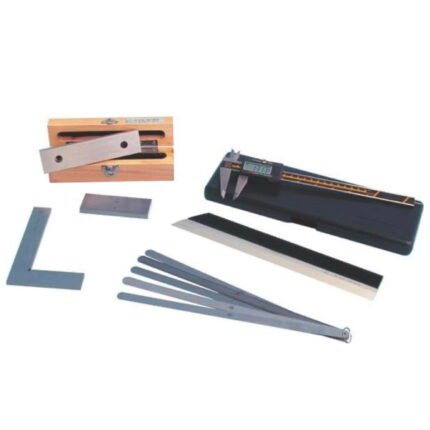
- Flatness of mould and specimen surfaces
- Straightness along mould edges and specimen sides
- Perpendicularity of internal walls and corners
- Dimensional accuracy (L × W × H, and diameter for cylinders)
- Go/No-Go tolerance checks for standardized cube mould sizes
- Surface deviation & gap measurement using feeler gauges
PLASTIC CUBE MOULD AZA1126
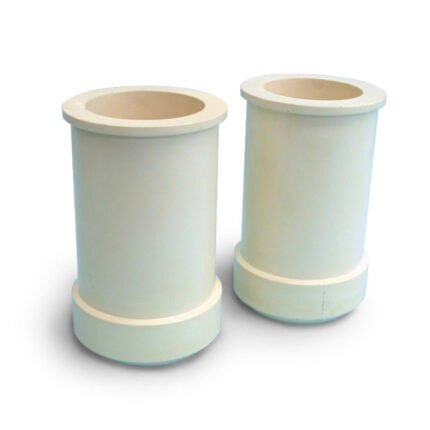
PLASTIC CYLINDERICAL MOULD AZA1127
| Model No. | Size | Material | Weight |
|---|---|---|---|
| AZA 1127 A | 150 mm × 300 mm | Polyurethane | 1.65 kg |
| AZA 1127 B | 100 mm × 200 mm | Polyurethane | 0.90 kg |

POCKET CONCRETE PENETROMETER AZA1114
- Measures Early Setting & Strength of concrete and mortar
- Direct Penetration Reading via spring-loaded plunger
- Dual Units: MPa or psi
- ASTM C403 & IS 8142 Compliant
- Compact, Portable & Field-Ready
- Includes Carrying Case & Calibration Chart