
 Rock
Rock Aggregate
 Cement
 Concrete
 Soil
Soil Steel
Steel Bitumen/Asphalt
 Security Survey Equipment
 General Items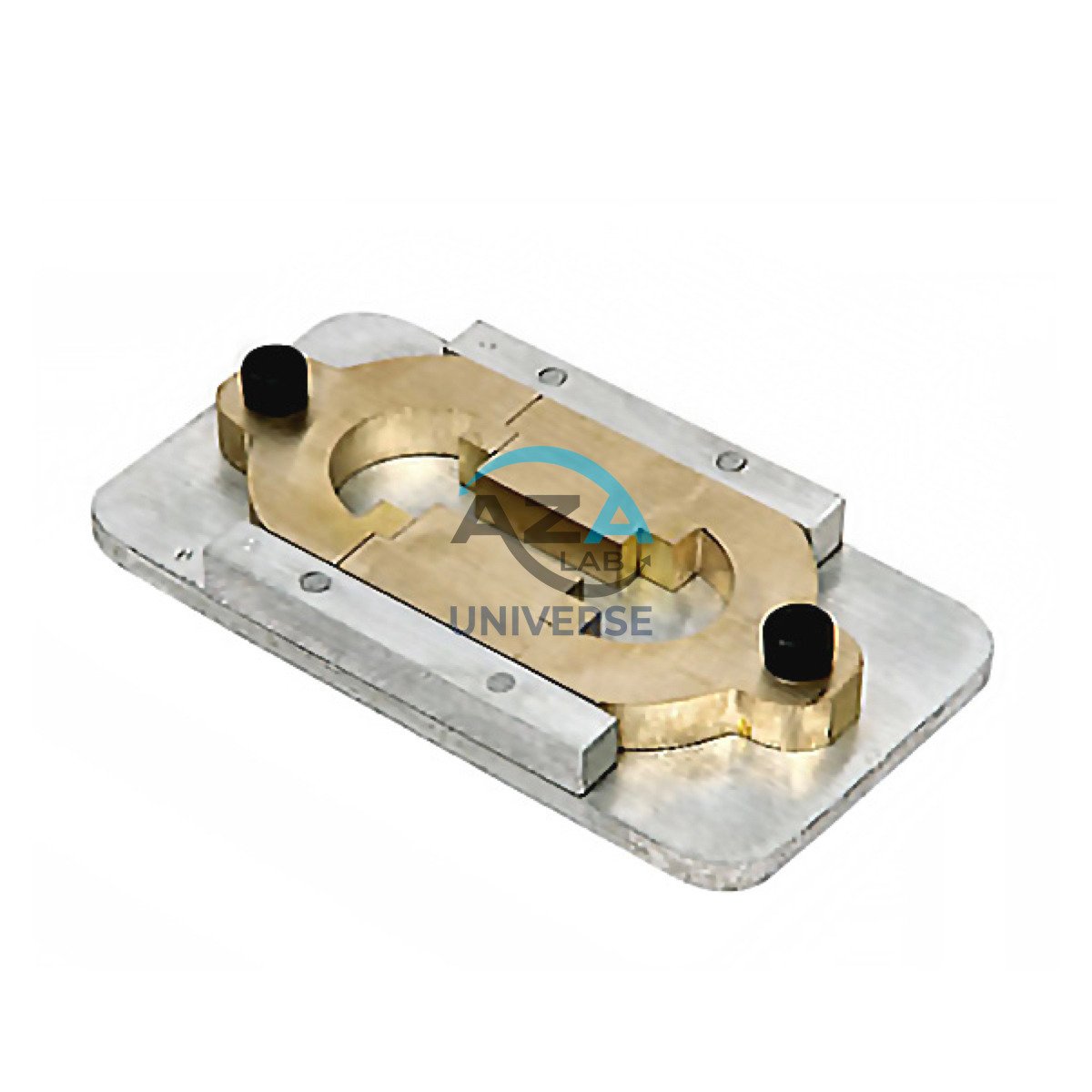

ELASTIC RECOVERY MOULD AZA0958
The AZA0958 Elastic Recovery Mould is a precision-engineered testing accessory used in bitumen ductility and elastic recovery tests, particularly for evaluating polymer-modified bitumen (PMB) and elastomer-modified binders. It plays a critical role in determining the elastic behavior of bituminous binders after elongation, which directly influences pavement performance under traffic loads and temperature variations.
Elastic recovery is a key parameter for modern road construction materials, especially where enhanced flexibility, crack resistance, and rutting resistance are required. The AZA0958 mould ensures the formation of standardized, dimensionally accurate specimens, enabling reliable and repeatable elastic recovery measurements in accordance with international standards.
Description
Importance of Elastic Recovery Testing
In conventional and modified asphalt pavements, bitumen is often enhanced with polymers to improve elasticity and durability. The elastic recovery test evaluates how effectively a binder can return to its original shape after being stretched.
This property is crucial because:
-
Elastic binders absorb traffic-induced stresses more effectively
-
Higher elastic recovery reduces permanent deformation (rutting)
-
Improved elasticity minimizes cracking under thermal cycling
-
Polymer-modified binders with good recovery extend pavement service life
The AZA0958 Elastic Recovery Mould enables precise sample preparation, which is fundamental to obtaining meaningful and comparable test results.
Principle of Use
The elastic recovery test using the AZA0958 mould follows a standardized procedure:
-
Heated bitumen is poured into the mould cavity and allowed to cool, forming a uniform test specimen.
-
The specimen is mounted in a ductility testing machine.
-
The sample is elongated at a controlled rate, typically 5 cm/min, in a temperature-controlled water bath.
-
Once the specimen reaches a specified elongation (commonly 20 cm), it is cut at the midpoint.
-
The two ends are allowed to retract freely.
-
The recovered length is measured and expressed as elastic recovery (%).
The mould’s dimensional accuracy ensures consistency across tests and laboratories.
Design and Construction Features
The AZA0958 Elastic Recovery Mould is designed for durability, precision, and ease of use:
-
High-Grade Construction
Manufactured from premium brass or stainless steel for excellent thermal stability and mechanical strength. -
Precision Machining
Smooth internal cavity ensures accurate specimen geometry and easy demolding without distortion. -
Dimensional Stability
Maintains exact dimensions during repeated heating and cooling cycles. -
Reusable Design
Suitable for long-term laboratory use with proper cleaning and handling. -
Universal Compatibility
Designed to fit standard ductility testing machines used worldwide.
Key Features & Benefits
-
Conforms to international elastic recovery testing standards
-
Ideal for polymer-modified and elastomer-modified bitumen
-
Brass or stainless steel options available
-
Smooth surface finish for clean specimen removal
-
High repeatability and reproducibility of test results
-
Long service life in QA/QC and research laboratories
Applications
-
Highway and road construction material testing
-
Polymer-modified bitumen (PMB) quality evaluation
-
Asphalt mix design and formulation research
-
Bitumen plant QA/QC laboratories
-
Academic and institutional research on binder elasticity
Technical Specifications
Model Number: AZA0958
Product Type:
-
Elastic Recovery Mould for Bitumen Testing
Standard Compliance:
-
ASTM D6084
-
EN 13398
Material Options:
-
Brass
-
Stainless Steel
Dimensions:
-
As per ASTM / EN standard specifications
Application:
-
Elastic recovery and ductility testing of bituminous binders
Compatibility:
-
Standard ductility testing machines
Usage Temperature:
-
Room temperature to 25 °C water bath
Reusability:
-
High (with proper cleaning and maintenance)
Maintenance and Cleaning
After testing, allow the mould to cool naturally. Residual bitumen can be removed using a soft cloth and an appropriate solvent such as toluene or equivalent laboratory-grade cleaner. Avoid abrasive tools to preserve surface finish and dimensional accuracy.
Frequently Asked Questions (FAQ)
Q1: What is the primary use of the AZA0958 Elastic Recovery Mould?
It is used to prepare standardized bitumen specimens for elastic recovery and ductility testing, especially for polymer-modified binders.
Q2: Which standards does the AZA0958 comply with?
The mould conforms to ASTM D6084 and EN 13398 requirements.
Q3: Can this mould be used for unmodified bitumen?
Yes, it can be used for conventional bitumen, although it is most critical for evaluating polymer-modified binders.
Q4: Is the mould compatible with all ductility testers?
Yes, it is designed to work with all standard ductility testing machines used globally.
Q5: What material should I choose—brass or stainless steel?
Brass offers excellent thermal stability and corrosion resistance, while stainless steel provides higher mechanical strength and extended durability.
Summary
-
Essential accessory for elastic recovery testing of bituminous binders
-
Ensures standardized and accurate specimen preparation
-
Critical for evaluating polymer-modified bitumen performance
-
Manufactured from precision-machined brass or stainless steel
-
Fully compliant with ASTM and EN standards
-
Ideal for road construction, QA/QC, and research laboratories
Additional information
| Standard Compliance |
ASTM D6084, EN 13398 |
|---|---|
| Material |
Brass / Stainless Steel |
| Dimensions |
As per ASTM/EN standard |
| Application |
Elastic recovery and ductility testing |
You may also like…
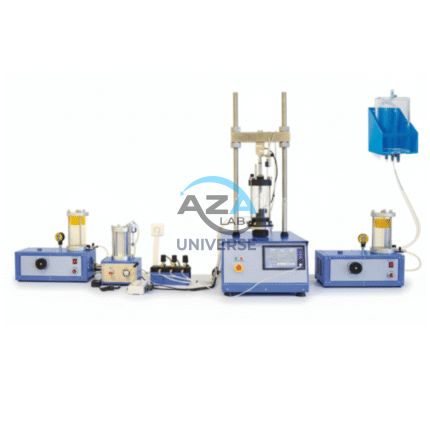
Advanced Triaxial Test System (UU–CU–CD Capable) (AZA 1296)
- UU–CU–CD test modes for complete soil strength profiling
- Automated control of pressure, load, and drainage
- Compatible with clay, silt, sand, and mixed soils
- Integrated data acquisition and real-time graphing
- Meets ASTM D2850, D4767, BS1377, AASHTO standards
- Ideal for geotechnical, research, and academic use
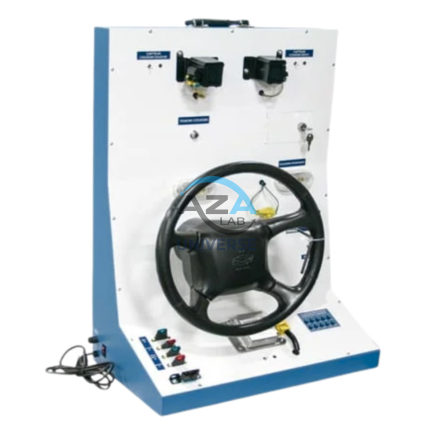
Air Bag Trainer AZA1246
The AZA1246 AZALAB Air Bag Trainer is a comprehensive educational training platform designed to demonstrate the structure, operation, diagnostics, and fault analysis of modern automotive airbag systems, also known as Supplemental Restraint Systems (SRS). Built using OEM automotive components, this trainer delivers a realistic learning experience while maintaining complete operational safety.
This system is ideally suited for automotive engineering colleges, ITIs, polytechnic institutes, vocational training centers, and service technician programs, enabling both theoretical instruction and hands-on diagnostics practice.
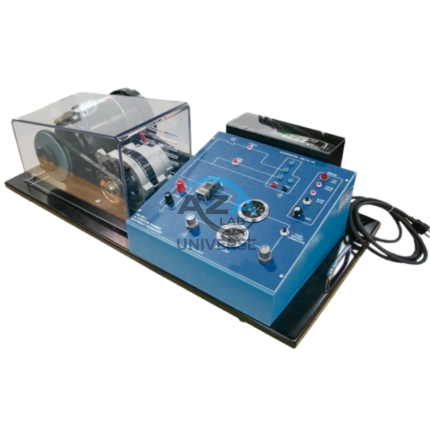
Alternator Trainer AZA1247
The AZA1247 AZALAB Alternator Trainer is a hands-on automotive electrical training system designed to demonstrate the working principles, construction, and diagnostics of an automotive alternator with external voltage regulation. Built using OEM automotive components, this trainer provides a realistic and safe learning platform for students, technicians, and trainees to understand vehicle charging systems in depth.
This system is ideal for automotive engineering institutes, ITIs, polytechnics, vocational training centers, and service technician programs, supporting both theoretical instruction and practical experimentation.
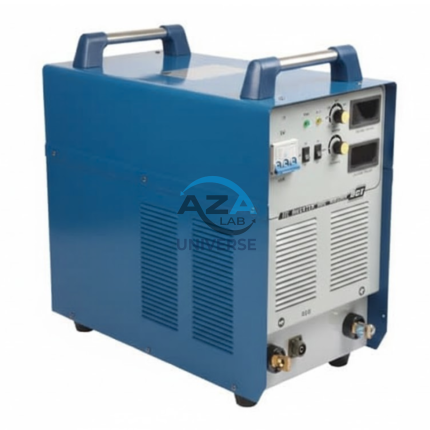
Arc Welding Machine AZA1234
The AZA1234 Arc Welding Machine by A Z A Lab is a high-performance industrial welding solution engineered for demanding fabrication, maintenance, and structural welding applications. Designed using advanced inverter technology, this machine delivers superior arc stability, high efficiency, and reliable welding performance across a wide range of electrode types and materials.
With an inverter frequency of up to 20 kHz, the AZA1234 ensures fast dynamic response, reduced spatter, and excellent weld bead appearance. Its robust electrical design supports a high duty cycle, allowing continuous operation under heavy loads while maintaining consistent welding output—even with output cable lengths of up to 100 meters.
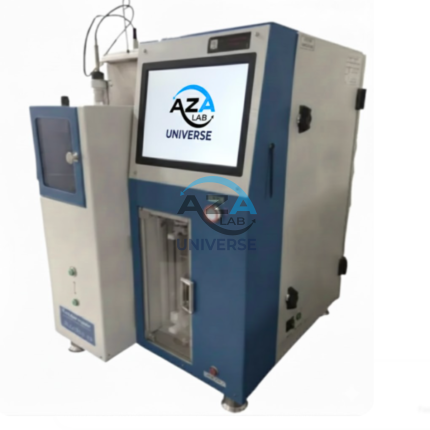
AutoDist‑86 Glass Distillation AZA1282
AutoDist-86 Glass Distillation Unit – AZA1282
The AutoDist-86 Glass Distillation Unit (Model: AZA1282) from AZA Lab is a high-performance laboratory water distiller engineered for the consistent production of ultra-pure distilled water. Manufactured entirely from high-grade borosilicate 3.3 glass, this unit delivers exceptional chemical resistance, thermal stability, and long-term durability, making it ideal for scientific, medical, pharmaceutical, and academic laboratories.
Designed for reliability and purity, the AZA1282 ensures contamination-free distillation without the risk of metallic ion leaching common in metal-bodied stills.
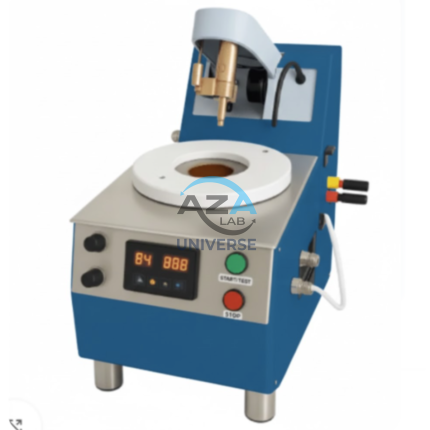
AutoFlash – Automated Abel Flash Point Analyzer AZA1277
The AutoFlash-1277 (Model: AZA1277) from AZA Lab is a fully automated, microcontroller-based Abel Flash Point Analyzer designed for accurate, safe, and repeatable determination of flash points of combustible liquids. Engineered to meet stringent international testing requirements, this advanced instrument conforms to IP 170, ISO 13736, and IS 1448 (Part 20) standards.
Covering a standard temperature range of –30°C to 70°C, extendable up to 110°C, the AZA1277 is ideally suited for laboratories involved in petroleum testing, petrochemical quality control, fuels research, and regulatory compliance.
Related products
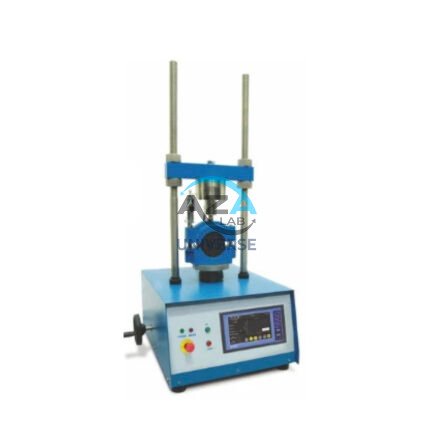
AUTOMATIC MARSHALL STABILITY TEST MACHINE AZA0954
The AZA0954 Automatic Marshall Stability Test Machine from AZALAB is a cornerstone instrument for modern civil engineering, highway material, and asphalt testing laboratories. Designed for fully automated determination of Marshall Stability and Marshall Flow, the AZA0954 plays a critical role in asphalt mix design, quality control, and performance evaluation of bituminous pavements.
Compared to conventional manual Marshall testers, the AZA0954 represents a significant technological advancement, offering superior accuracy, repeatability, operational efficiency, and digital data management. It is ideally suited for laboratories handling high sample volumes, regulatory testing, and advanced pavement research.
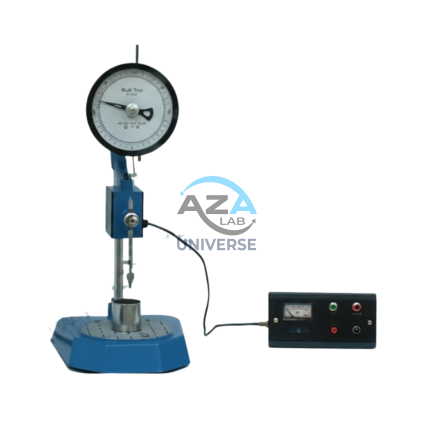
DIGITAL PENETROMETER AZA0939
The AZA0939 Digital Penetrometer from Azalab is an advanced, high-precision laboratory instrument designed for the accurate determination of the consistency of bituminous materials, including bitumen, asphalt, greases, waxes, petroleum jelly, and other semi-solid substances. Engineered for laboratories that demand maximum accuracy, repeatability, and ease of operation, the AZA0939 combines classical penetration testing principles with modern digital measurement and automated timing.
This instrument is widely used in civil engineering laboratories, road construction authorities, asphalt plants, petroleum laboratories, research institutions, and quality control departments, where strict compliance with international standards such as ASTM D5, EN 1426, AASHTO T49, IP 49, and IS 1203 is required.
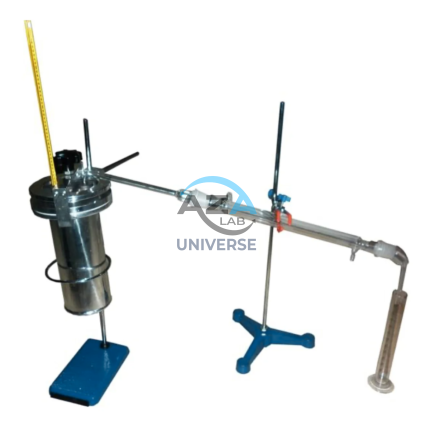
DISTILLATION FOR CUT BACK BITUMEN AZA0937
The AZA0937 Distillation for Cut-Back Bitumen from Azalab is a precision laboratory apparatus designed for the quantitative determination of volatile diluents (fluxing agents or solvents) present in cut-back asphaltic materials. This test is essential for evaluating the curing behavior, workability, and final performance of cut-back bitumen used in road construction and pavement maintenance applications.
Cut-back bitumen relies on volatile solvents to temporarily reduce viscosity for ease of handling and application. The controlled distillation performed using the AZA0937 accurately measures these volatile components, enabling engineers and laboratory technicians to classify cut-back bitumen grades and verify compliance with project and regulatory specifications.
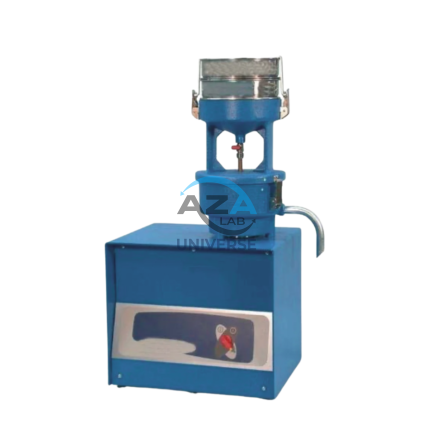
FILTERLESS CENTIFUGE EXTRACTOR AZA0947
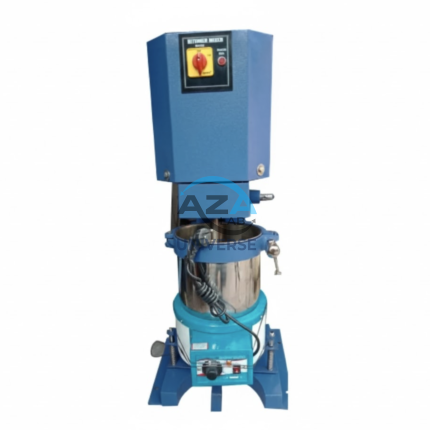
MIXER WITH HEATING JACKET AZA0955
The AZA0955 Mixer with Heating Jacket from AZALAB is a specialized laboratory apparatus engineered for the precise, uniform, and temperature-controlled mixing of materials that require elevated temperatures during blending. It is an essential instrument in civil engineering and highway material laboratories, particularly for the preparation of bituminous and asphalt mixes such as Hot Mix Asphalt (HMA).
By maintaining materials at a controlled and uniform temperature throughout the mixing process, the AZA0955 ensures optimal binder viscosity, thorough aggregate coating, and homogeneous sample preparation. This level of control is critical for producing accurate, repeatable, and representative laboratory specimens, which directly influence the reliability of asphalt mix design, quality control, and performance testing.
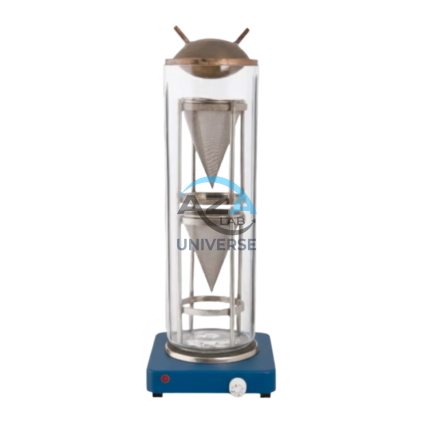
REFLUX EXTRACTOR 4000 GMS AZA0941
The AZA0941 Reflux Extractor 4000 GMS from Azalab is a high-efficiency laboratory apparatus designed for the quantitative determination of bitumen content in asphalt paving mixtures using the reflux extraction method. Engineered for large sample capacities up to 4000 grams, the AZA0941 is an essential instrument for civil engineering laboratories, road construction quality control, and materials testing facilities.
By ensuring accurate separation of bitumen binder from aggregates, the AZA0941 helps verify compliance with asphalt mix design specifications, directly contributing to durable, high-performance pavement construction.
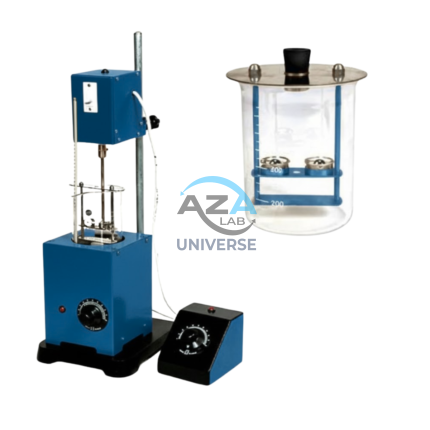
RING AND BALL APPARATUS (ELECTRICAL) AZA0933
The AZA0933 Ring & Ball Apparatus (Electrical) from Azalab is a precision laboratory instrument designed for the accurate and repeatable determination of the softening point of bitumen, asphalt binders, and other bituminous materials. This test is fundamental for evaluating the temperature susceptibility and high-temperature performance of asphalt binders, which directly influences pavement resistance to rutting and deformation.
By utilizing electrically controlled heating instead of open flame, the AZA0933 ensures consistent heating rates, improved safety, and superior test repeatability, making it an essential instrument for highway laboratories, civil engineering departments, and research institutions.
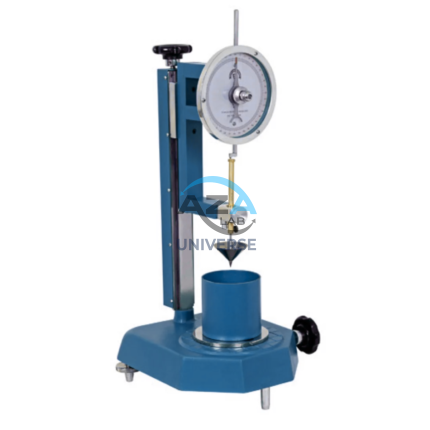
STANDARD PENETROMETER AZA0938
The AZA0938 Standard Penetrometer from Azalab is a robust, reliable, and manually operated laboratory instrument designed for the accurate determination of the consistency of bituminous materials, including bitumen, asphalt, waxes, and greases. It is an essential testing device widely used in civil engineering laboratories, highway authorities, asphalt plants, and quality control laboratories where consistent and repeatable penetration measurements are required.
The AZA0938 operates on the classical penetration testing principle and provides a cost-effective yet precise solution for grading and classifying bituminous binders in accordance with internationally recognized standards such as ASTM D5, EN 1426, AASHTO T49, IP 49, and IS 1203.