
 Rock
Rock Aggregate
 Cement
 Concrete
 Soil
Soil Steel
Steel Bitumen/Asphalt
 Security Survey Equipment
 General Items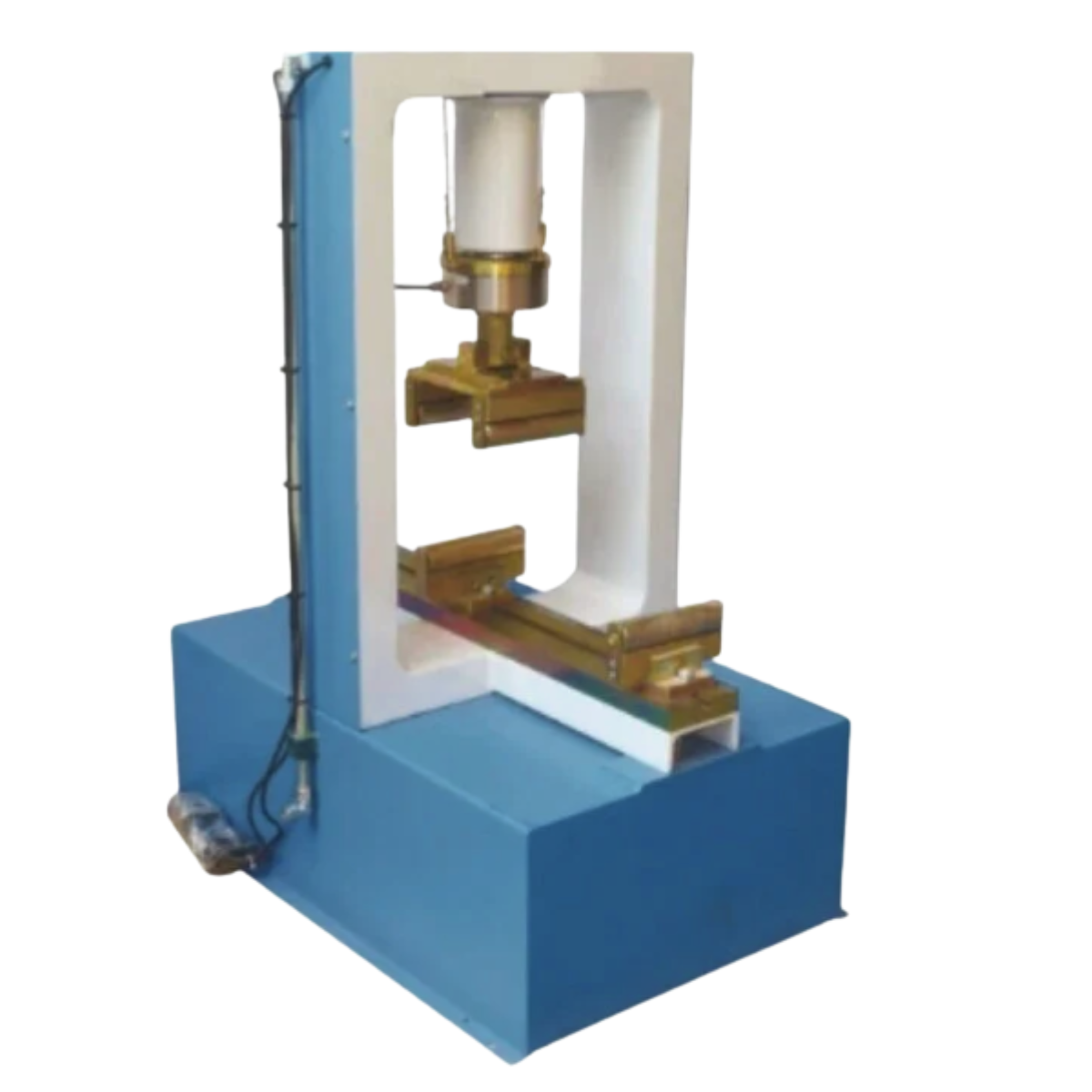
FLEXURAL FRAME 100 KN AZA1137
The Azalab AZA1137 Flexural Frame 100 kN is a precision-engineered apparatus used to determine the flexural (bending) strength of concrete beams, tiles, slabs, and paving blocks. Designed for reliability and consistent test results, this frame is used widely in construction testing labs, infrastructure QA/QC facilities, R&D institutions, and universities.
Built with a rigid steel structure—either a two-column or four-column configuration—the frame minimizes deflection under maximum load, ensuring highly accurate and repeatable results. With a capacity of 100 kN (10 tons), it accommodates standard concrete beam sizes such as 100×100×500 mm and 150×150×700 mm, along with various tile or slab formats.
The frame integrates a high-accuracy load cell with a digital indicator or PC-connected data acquisition system. Test force is delivered through a hydraulic power pack (manual or servo-controlled), allowing smooth, controlled application of load.
Key Features
- 100 kN high-capacity frame for concrete flexural testing
- Rigid two-column or four-column structural design
- Compatible with beams, tiles, paving blocks, and slabs
- High-accuracy load cell with digital readout
- Supports third-point and center-point loading
- Compliant with ASTM C78, ASTM C293, EN 12390-5, IS 516
- Manual, semi-automatic, or servo-controlled operation
- Ideal for laboratories, R&D centers, QC departments
Description
Testing Method
A typical test setup includes:
-
Lower adjustable supports (span 100 – 800 mm)
-
Upper loading nose (single-point or third-point configuration)
The load is applied at a controlled rate until specimen failure. The system records peak load, enabling precise calculation of flexural strength in compliance with global standards.
Compliance Standards
The AZA1137 fully meets the requirements of:
-
ASTM C78 – Flexural strength (third-point loading)
-
ASTM C293 – Flexural strength (center-point loading)
-
EN 12390-5 – Determination of flexural strength of concrete
-
IS 516 (Part 5/Sec 1) – Flexural strength of concrete
Applications
-
Concrete beam flexural testing
-
Pavement tile and block strength evaluation
-
R&D for new material development
-
Structural analysis and experimental studies
-
QA/QC for bridges, pavements, slabs, industrial floors
Standard Features Included
-
Precision-machined rollers and loading noses
-
Adjustable support span
-
High-accuracy (+/– 0.5% FS) load cell
-
Digital load indicator (upgradable to PC software)
-
Safety guards/enclosures
-
Manual, semi-automatic, or servo modes
-
Optional displacement transducers for LVDT-based flexural deformation measurement
Specifications
| Feature | Specification |
|---|---|
| Load Capacity | 100 kN (10 tons) |
| Frame Type | Two-column or Four-column |
| Specimens | Beams, tiles, slabs, paving blocks |
| Span Adjustment | 100 mm – 800 mm |
| Loading Method | Third-point / Center-point |
| Load Cell Accuracy | ±0.5% Full Scale |
| Display Options | Digital Indicator / PC Software |
| Power Pack | Manual / Semi-automatic / Servo |
| Standards Complied | ASTM C78, C293, EN 12390-5, IS 516 |
| Accessories | Loading noses, supports, safety enclosure |
Available Models
| Model No. | Capacity | Operation | Display |
|---|---|---|---|
| AZA1137-M | 100 kN | Manual Power Pack | Digital Indicator |
| AZA1137-SA | 100 kN | Semi-Automatic | Digital Indicator |
| AZA1137-SC | 100 kN | Servo-Controlled | PC Software |
Frequently Asked Questions (FAQ)
Q1: What is the main function of the AZA1137 Flexural Frame?
It measures the bending (flexural) strength of concrete beams, tiles, slabs, and paving blocks.
Q2: Does it comply with international test standards?
Yes. It adheres to ASTM C78, ASTM C293, EN 12390-5, and IS 516 requirements.
Q3: Can the span be adjusted?
Yes. The span adjustment range is 100 mm to 800 mm, accommodating various specimen sizes.
Q4: What operation modes are available?
Manual, semi-automatic, and fully servo-controlled versions are available.
Q5: How is calibration performed?
Calibration is done using certified load cells or hydraulic calibration kits.
Q6: Can the system connect to a computer?
Yes. The PC-connected version offers data logging, graphing, and report generation.
Additional information
| Load Capacity |
100 kN (10 tons) |
|---|---|
| Frame Type |
Two-column or Four-column |
| Test Specimens |
Beams, tiles, paving blocks |
| Span Adjustment |
100 mm to 800 mm (adjustable) |
You may also like…
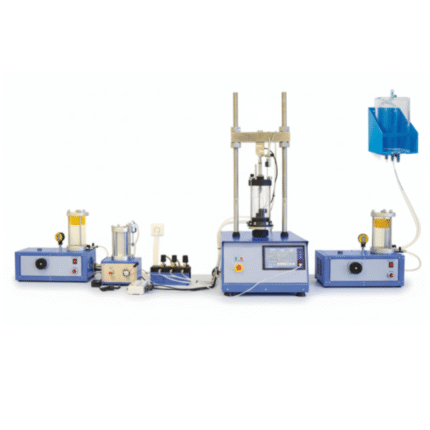
ADVANCED TRIAXIAL TEST SYSTEM (UU–CU–CD CAPABLE) AZA1296
The AZA LAB Advanced Triaxial Test System AZA1296 is a fully automated geotechnical laboratory testing system designed for accurate determination of soil shear strength and deformation characteristics under controlled stress and drainage conditions.
The system supports all major triaxial compression testing modes including:
- Unconsolidated Undrained (UU)
- Consolidated Undrained (CU)
- Consolidated Drained (CD)
Engineered for high-precision geotechnical analysis, the AZA1296 replicates in-situ soil stress conditions to evaluate soil stability, strength behavior, pore pressure response, and failure mechanisms under axial loading.
The system integrates servo-controlled loading, automatic pressure regulation, real-time pore pressure monitoring, automated data acquisition, and advanced software analysis, making it ideal for geotechnical laboratories, civil engineering projects, infrastructure development, research institutions, and academic applications.
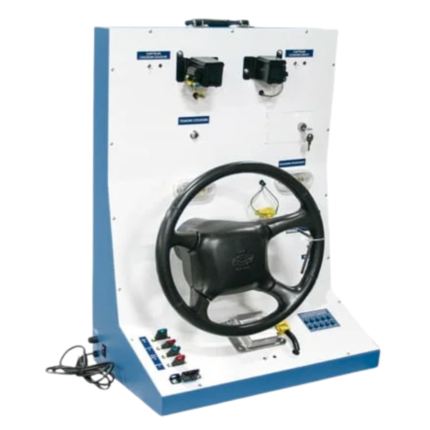
AIR BAG TRAINER AZA1246
The AZA1246 AZALAB Air Bag Trainer is a comprehensive educational training platform designed to demonstrate the structure, operation, diagnostics, and fault analysis of modern automotive airbag systems, also known as Supplemental Restraint Systems (SRS). Built using OEM automotive components, this trainer delivers a realistic learning experience while maintaining complete operational safety.
This system is ideally suited for automotive engineering colleges, ITIs, polytechnic institutes, vocational training centers, and service technician programs, enabling both theoretical instruction and hands-on diagnostics practice.
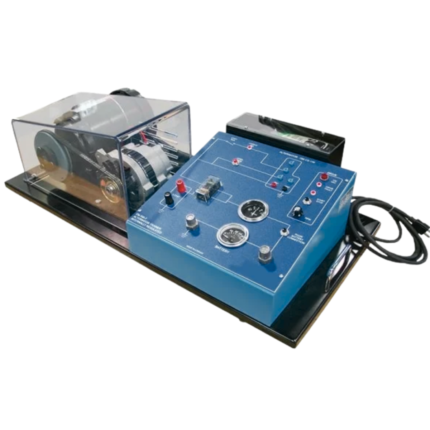
ALTERNATOR TRAINER AZA1247
The AZA1247 AZALAB Alternator Trainer is a hands-on automotive electrical training system designed to demonstrate the working principles, construction, and diagnostics of an automotive alternator with external voltage regulation. Built using OEM automotive components, this trainer provides a realistic and safe learning platform for students, technicians, and trainees to understand vehicle charging systems in depth.
This system is ideal for automotive engineering institutes, ITIs, polytechnics, vocational training centers, and service technician programs, supporting both theoretical instruction and practical experimentation.
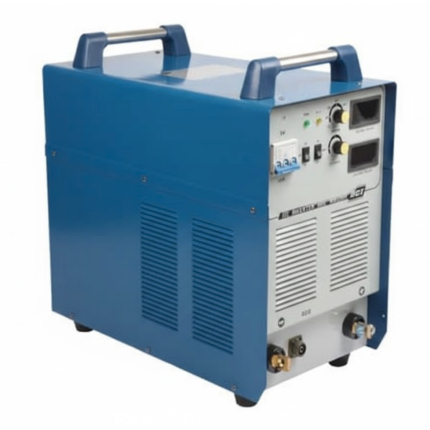
ARC WELDING MACHINE AZA1234
The AZA1234 Arc Welding Machine by A Z A Lab is a high-performance industrial welding solution engineered for demanding fabrication, maintenance, and structural welding applications. Designed using advanced inverter technology, this machine delivers superior arc stability, high efficiency, and reliable welding performance across a wide range of electrode types and materials.
With an inverter frequency of up to 20 kHz, the AZA1234 ensures fast dynamic response, reduced spatter, and excellent weld bead appearance. Its robust electrical design supports a high duty cycle, allowing continuous operation under heavy loads while maintaining consistent welding output—even with output cable lengths of up to 100 meters.
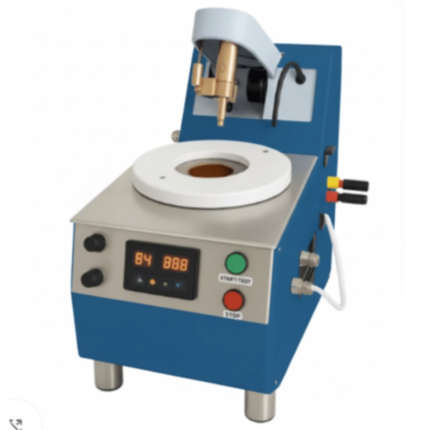
AUOTFLASH AUTOMATED ABEL FLASH POINT ANALYZER AZA1277
The AutoFlash-1277 (Model: AZA1277) from AZA Lab is a fully automated, microcontroller-based Abel Flash Point Analyzer designed for accurate, safe, and repeatable determination of flash points of combustible liquids. Engineered to meet stringent international testing requirements, this advanced instrument conforms to IP 170, ISO 13736, and IS 1448 (Part 20) standards.
Covering a standard temperature range of –30°C to 70°C, extendable up to 110°C, the AZA1277 is ideally suited for laboratories involved in petroleum testing, petrochemical quality control, fuels research, and regulatory compliance.
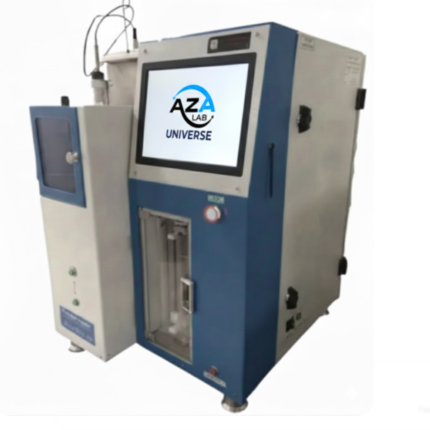
AUTODIST-86 GLASS DISTILLATION UNITAZA1282
The AutoDist-86 Glass Distillation Unit (Model AZA1282) is a high-performance laboratory water distiller designed for the continuous production of high-purity distilled water.
Constructed entirely from borosilicate glass 3.3, the unit ensures zero metallic contamination, excellent thermal resistance, and long operational life. It is ideal for laboratories requiring consistent, low-conductivity distilled water for analytical, pharmaceutical, and research applications.Distillation Performance
- Distillate Output: Up to 4 L/hour (±10%)
- Suitable for routine and medium-scale laboratory demand
- Efficient removal of:
- Dissolved salts
- Heavy metals
- Organic/inorganic impurities
- Microbial contaminants
Related products
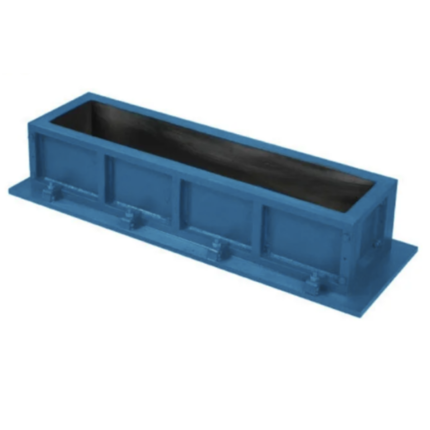
BEAM MOULD AZA1124
Purpose & Importance
Flexural strength testing evaluates a concrete beam’s ability to resist bending stress. Standards such as IS 516, ASTM C78, and BS EN 12390-5 specify strict guidelines for specimen dimensions and surface finish. The AZA1124 Beam Mould enables users to produce uniform, high-quality concrete beams with precise cross-sections, ensuring reliability and compliance during flexural strength evaluation.Beams cast from AZA1124 are used for:
- Flexural tensile strength testing
- Load-bearing capacity studies
- Structural behavior simulations
- R&D on mix designs and reinforcement additives
Ideal for:
- Civil engineering research laboratories
- Cement product quality assurance departments
- Construction material testing centers
- Technical universities and engineering institutions

J-RING, NARROW GAP AZA1109
AZA1109 J-Ring – Narrow Gap is a precision testing apparatus designed to evaluate the passing ability of Self-Compacting Concrete (SCC) under highly restrictive conditions. This device simulates densely congested reinforcement zones by creating artificial obstructions that the fresh SCC must flow through without blocking or segregating. It is an essential tool for determining whether SCC mixes are suitable for heavily reinforced structural elements such as beams, columns, and shear walls.
The narrow gap design offers a more stringent test compared to standard J-Rings, allowing engineers and quality control professionals to accurately observe flow diameter, T50 flow time, and blocking behavior. When used in combination with a standard slump flow cone, AZA1109 provides reliable, repeatable results that help optimize mix designs and ensure consistent on-site performance.
Manufactured from durable, corrosion-resistant steel, the AZA1109 is built for repeated use in laboratory and field testing environments. The apparatus is fully compliant with ASTM C1621 and EFNARC guidelines, ensuring internationally accepted testing procedures.
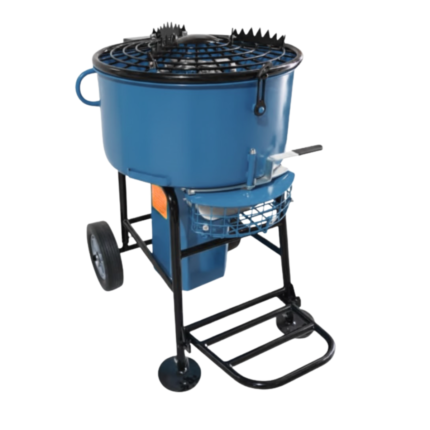
LABOMIX CONCRETE PAN MIXER AZA1118
The AZA1118 Labomix Concrete Pan Mixer is designed for demanding, high-volume mixing operations in construction laboratories, R&D facilities, and material testing centers. Built for durability and precision, it delivers consistent blends of concrete, mortar, grout, and aggregate mixes while supporting rigorous IS/ASTM test procedures.
Engineered with a high-efficiency gear-driven transmission, it provides stable torque, low maintenance requirements, and excellent mixing uniformity. The unit is available in multiple capacities from 90 litres to 300 litres, enabling users to select suitable volume for their operational needs.
The mixer features exchangeable mixing shovels, a safe-locking automatic discharge system, and large mobility wheels that allow a single operator to handle batching, mixing, and discharging efficiently.
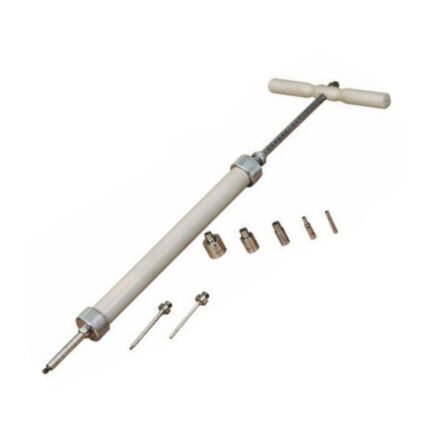
MORTAR PENETROMETER AZA1115
Key Features
- Complies with ASTM C403 Standard
- Used to determine mortar hardening rate
- Spring-loaded stem graduated 0–70 kg (1 kg divisions)
- Includes six interchangeable stainless steel needles
- Measures resistance at 25 mm penetration
- Shanks marked every 5 mm for depth guidance
- Supplied in a polished wooden carrying case
- Suitable for both laboratory and on-site QC
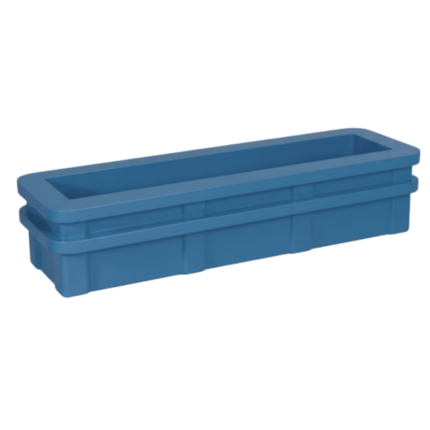
PLASTIC BEAM MOULD AZA1128
The Azalab AZA1128 Polyurethane Beam Mould Series is engineered for casting concrete beam specimens used in flexural strength tests. Built from high-impact, shock-absorbing polyurethane, these moulds deliver exceptional durability, dimensional accuracy, and ease of handling. Their lightweight yet robust design makes them suitable for both laboratory and field applications.
Polyurethane offers superior resilience compared to traditional metal or rigid plastic alternatives, enabling these moulds to withstand vibration, repeated use, and environmental exposure. The smooth internal finish ensures clean, damage-free demoulding, while the mould structure maintains consistency across multiple cycles.
Each AZA1128 mould complies with IS 516, ASTM C78, and BS 1881, ensuring reliable and standardized test preparation.
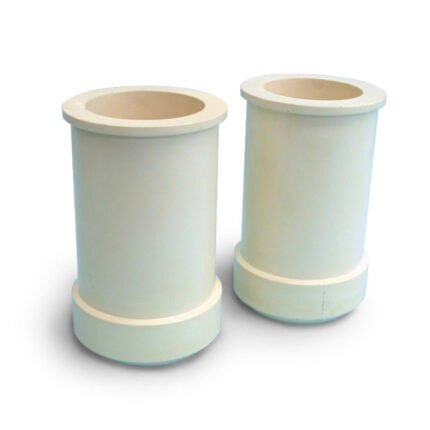
PLASTIC CYLINDERICAL MOULD AZA1127
| Model No. | Size | Material | Weight |
|---|---|---|---|
| AZA 1127 A | 150 mm × 300 mm | Polyurethane | 1.65 kg |
| AZA 1127 B | 100 mm × 200 mm | Polyurethane | 0.90 kg |
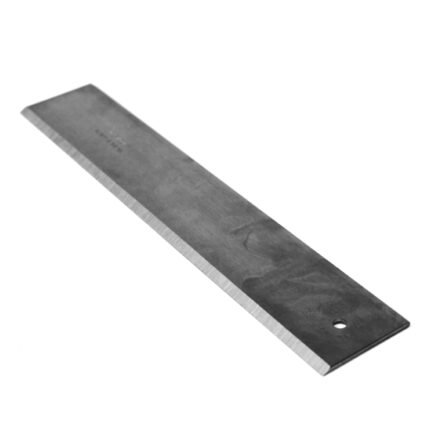
STRAIGHT EDGE AZA1120
The AZA1120 Precision Steel Straight Edge is a laboratory-grade tool engineered for leveling, scraping, and finishing concrete and soil specimens during testing procedures. Used extensively in concrete cube/cylinder preparation, slump cone tests, and air meter testing, this straight edge ensures flat, uniform specimen surfaces essential for accurate and repeatable results.
Manufactured from high-grade hardened steel, the AZA1120 offers superior rigidity, dimensional stability, and long-term durability. The flat, 1-inch wide, 12-inch long bar profile allows smooth handling and effortless removal of excess material from molds. A corrosion-resistant polished or matte finish further enhances longevity and reliability in both lab and field conditions.
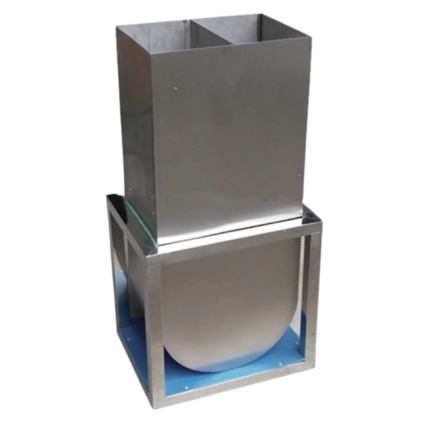
U SHAPE BOX APPARATUS AZA1113
- Measures SCC blocking resistance through simulated rebar congestion
- Accurately indicates flowability and passing ability of SCC mixes
- Robust U-shaped two-chamber design with sliding gate
- Conforms to international SCC testing standards
- Includes precision steel rod arrangement and measuring scale
- Durable, corrosion-resistant construction for field and lab use
- Ideal for SCC mix design, approval, and continuous quality control