
 Rock
Rock Aggregate
 Cement
 Concrete
 Soil
Soil Steel
Steel Bitumen/Asphalt
 Security Survey Equipment
 General Items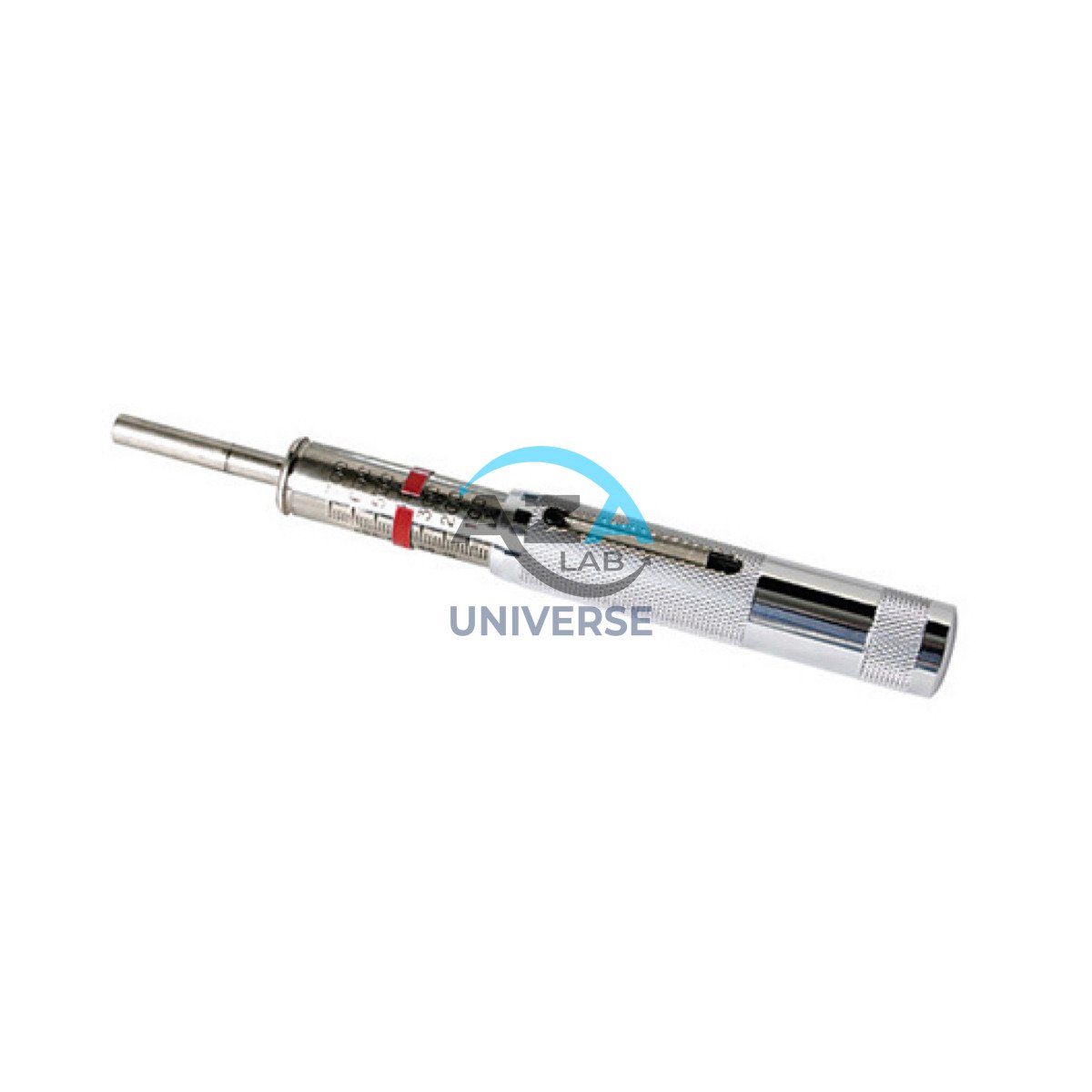
POCKET CONCRETE PENETROMETER AZA1114
Early-Setting & Strength Assessment Tool for Concrete and Mortar
The AZA1114 Pocket Concrete Penetrometer is a compact, precision-engineered testing instrument designed to measure the initial and final setting times and early strength of fresh concrete and mortar. Built for field engineers, QC inspectors, and laboratory technicians, this spring-type penetrometer provides quick, reliable results aligned with ASTM C403 and IS 8142 standards.
Engineered for portability and durability, the AZA1114 delivers consistent penetration resistance readings directly in MPa or psi, making it an essential device for construction sites, precast facilities, mix design studies, and shotcrete applications.
Key Features
- Measures Early Setting & Strength of concrete and mortar
- Direct Penetration Reading via spring-loaded plunger
- Dual Units: MPa or psi
- ASTM C403 & IS 8142 Compliant
- Compact, Portable & Field-Ready
- Includes Carrying Case & Calibration Chart
Ideal for on-site and laboratory evaluations
Description
The AZA1114 Pocket Concrete Penetrometer operates using a spring-loaded stainless-steel plunger. The resistance encountered during penetration correlates directly to the concrete’s stiffness and early strength. The calibrated scale helps engineers determine:
- Initial set: when mix begins to stiffen
- Final set: when mix gains sufficient rigidity
- Early compressive strength development
- Suitability for finishing, formwork removal, or loading
Typical applications include:
- Road and pavement construction
- Precast concrete production
- Shotcrete and sprayed mortar work
- Cement additive/admixture research
- Fast assessment in remote field conditions
How It Works
- Place the plunger against the surface of fresh mortar/concrete.
- Apply uniform pressure until the plunger penetrates to a standard depth.
- Note the resistance reading on the scale (MPa or psi).
- Repeat at intervals to produce a penetration resistance vs. time curve.
- Use results to determine initial and final setting times per ASTM C403.
Technical Specifications
| Feature | Specification |
| Model | AZA1114 |
| Measurement Range | 0.1 to 7.0 MPa (15–1000 psi) |
| Plunger Diameter | 6.4 mm (ASTM compliant) |
| Readout Type | Mechanical Scale (Optional Digital Variant) |
| Body Material | Stainless Steel |
| Accuracy | ±2% of full scale |
| Standards Compliance | ASTM C403, IS 8142 |
| Application | Setting Time & Early Strength of Concrete/Mortar |
| Accessories Included | Carry Case, Calibration Chart, Manual |
| Use Environment | Field and Laboratory |
Frequently Asked Questions (FAQ)
Q1: What does the AZA1114 Penetrometer measure?
It measures penetration resistance to determine setting times and early strength of concrete or mortar.
Q2: Is it suitable for field use?
Yes. It is lightweight, durable, and supplied in a protective case.
Q3: Is it compliant with ASTM standards?
Fully compliant with ASTM C403 and IS 8142.
Q4: How is the result displayed?
A calibrated mechanical scale shows resistance in MPa or psi.
Q5: How often should calibration be checked?
Annually, or immediately after accidental drop/impact.
Additional information
| Measurement Range |
0.1 to 7.0 MPa (15 to 1000 psi) |
|---|---|
| Body Material |
Stainless Steel |
| Plunger Diameter |
6.4 mm (ASTM compliant) |
| Readout Type |
Mechanical Scale / Optional Digital |
You may also like…
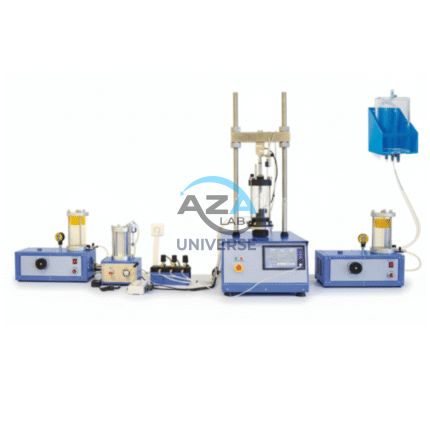
Advanced Triaxial Test System (UU–CU–CD Capable) (AZA 1296)
- UU–CU–CD test modes for complete soil strength profiling
- Automated control of pressure, load, and drainage
- Compatible with clay, silt, sand, and mixed soils
- Integrated data acquisition and real-time graphing
- Meets ASTM D2850, D4767, BS1377, AASHTO standards
- Ideal for geotechnical, research, and academic use
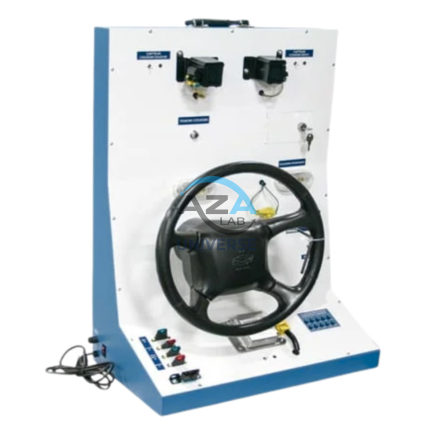
Air Bag Trainer AZA1246
The AZA1246 AZALAB Air Bag Trainer is a comprehensive educational training platform designed to demonstrate the structure, operation, diagnostics, and fault analysis of modern automotive airbag systems, also known as Supplemental Restraint Systems (SRS). Built using OEM automotive components, this trainer delivers a realistic learning experience while maintaining complete operational safety.
This system is ideally suited for automotive engineering colleges, ITIs, polytechnic institutes, vocational training centers, and service technician programs, enabling both theoretical instruction and hands-on diagnostics practice.
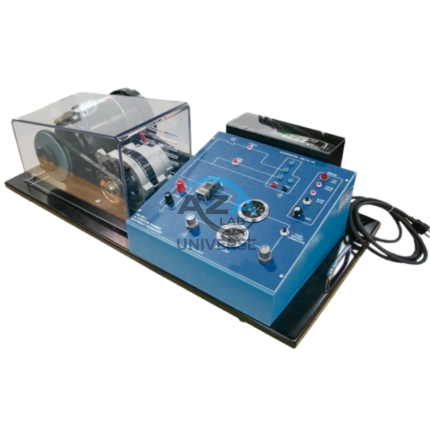
Alternator Trainer AZA1247
The AZA1247 AZALAB Alternator Trainer is a hands-on automotive electrical training system designed to demonstrate the working principles, construction, and diagnostics of an automotive alternator with external voltage regulation. Built using OEM automotive components, this trainer provides a realistic and safe learning platform for students, technicians, and trainees to understand vehicle charging systems in depth.
This system is ideal for automotive engineering institutes, ITIs, polytechnics, vocational training centers, and service technician programs, supporting both theoretical instruction and practical experimentation.
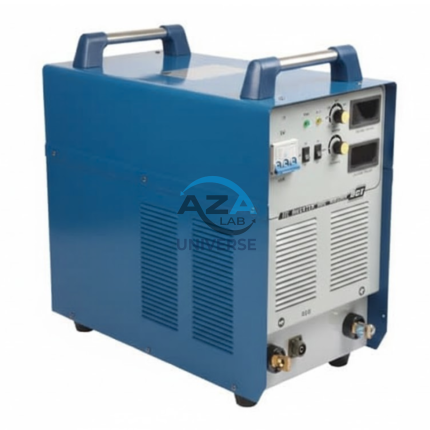
Arc Welding Machine AZA1234
The AZA1234 Arc Welding Machine by A Z A Lab is a high-performance industrial welding solution engineered for demanding fabrication, maintenance, and structural welding applications. Designed using advanced inverter technology, this machine delivers superior arc stability, high efficiency, and reliable welding performance across a wide range of electrode types and materials.
With an inverter frequency of up to 20 kHz, the AZA1234 ensures fast dynamic response, reduced spatter, and excellent weld bead appearance. Its robust electrical design supports a high duty cycle, allowing continuous operation under heavy loads while maintaining consistent welding output—even with output cable lengths of up to 100 meters.
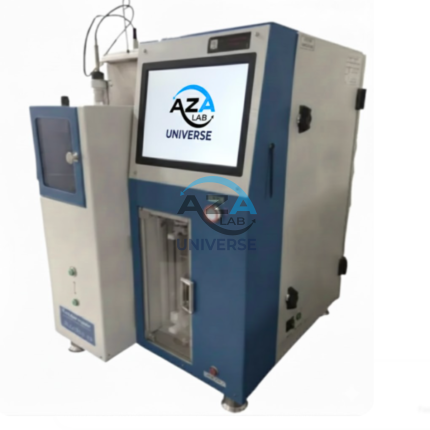
AutoDist‑86 Glass Distillation AZA1282
AutoDist-86 Glass Distillation Unit – AZA1282
The AutoDist-86 Glass Distillation Unit (Model: AZA1282) from AZA Lab is a high-performance laboratory water distiller engineered for the consistent production of ultra-pure distilled water. Manufactured entirely from high-grade borosilicate 3.3 glass, this unit delivers exceptional chemical resistance, thermal stability, and long-term durability, making it ideal for scientific, medical, pharmaceutical, and academic laboratories.
Designed for reliability and purity, the AZA1282 ensures contamination-free distillation without the risk of metallic ion leaching common in metal-bodied stills.
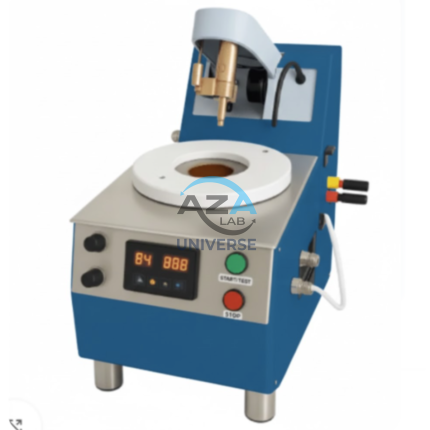
AutoFlash – Automated Abel Flash Point Analyzer AZA1277
The AutoFlash-1277 (Model: AZA1277) from AZA Lab is a fully automated, microcontroller-based Abel Flash Point Analyzer designed for accurate, safe, and repeatable determination of flash points of combustible liquids. Engineered to meet stringent international testing requirements, this advanced instrument conforms to IP 170, ISO 13736, and IS 1448 (Part 20) standards.
Covering a standard temperature range of –30°C to 70°C, extendable up to 110°C, the AZA1277 is ideally suited for laboratories involved in petroleum testing, petrochemical quality control, fuels research, and regulatory compliance.
Related products
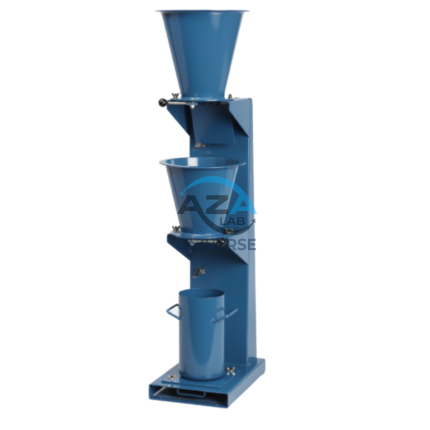
COMPACTION FACTOR APPARATUS AZA1107
- Precision measurement of compaction factor for dry and stiff concrete
- Double-hopper system with smooth trap release
- Conforms to IS 1199 and BS 1881 standards
- Suitable for precast plants, RMC units, and civil engineering labs
- Rugged, powder-coated mild-steel construction
- Cylindrical container included for final measurement

INITIAL SURFACE ABSORPTION TEST (ISAT) APPARATUS AZA1108
AZA1108 ISAT Apparatus is a precision-engineered testing instrument designed to measure the Initial Surface Absorption of hardened concrete. This test is essential for evaluating the durability of concrete by determining how quickly water penetrates the surface under controlled conditions. The apparatus is widely used in civil engineering laboratories and quality control departments to assess permeability and long-term performance of concrete structures exposed to moisture.
Built with a high-accuracy capillary tube system, the AZA1108 maintains a constant water head over a defined test area and records the volume of water absorbed over specific time intervals — typically at 10, 30, and 60 minutes. The readings obtained help engineers understand the surface porosity of concrete, which is a critical indicator of resistance against weathering, chloride ingress, corrosion of reinforcement, and environmental deterioration.
Designed in compliance with BS 1881-208, this apparatus ensures reliable, repeatable, and standard-compliant results. Its sturdy, rust-proof construction and easy-to-use configuration make it ideal for both routine testing and advanced durability studies in construction material laboratories.

J-RING, NARROW GAP AZA1109
AZA1109 J-Ring – Narrow Gap is a precision testing apparatus designed to evaluate the passing ability of Self-Compacting Concrete (SCC) under highly restrictive conditions. This device simulates densely congested reinforcement zones by creating artificial obstructions that the fresh SCC must flow through without blocking or segregating. It is an essential tool for determining whether SCC mixes are suitable for heavily reinforced structural elements such as beams, columns, and shear walls.
The narrow gap design offers a more stringent test compared to standard J-Rings, allowing engineers and quality control professionals to accurately observe flow diameter, T50 flow time, and blocking behavior. When used in combination with a standard slump flow cone, AZA1109 provides reliable, repeatable results that help optimize mix designs and ensure consistent on-site performance.
Manufactured from durable, corrosion-resistant steel, the AZA1109 is built for repeated use in laboratory and field testing environments. The apparatus is fully compliant with ASTM C1621 and EFNARC guidelines, ensuring internationally accepted testing procedures.

K-SLUMP TESTER AZA1104
AZA1104 K-Slump Tester is a fast, reliable, and non-destructive testing device designed to measure the workability and consistency of fresh concrete directly at construction sites or in laboratory environments. It provides instant slump approximation without the need for traditional slump cones, base plates, or tamping rods, making it an essential tool for modern concrete quality control.
This handheld instrument is widely used by civil engineers, site technicians, and quality inspectors who require quick, repeatable, and real-time results during concrete batching, transportation, and placement. Its simple design eliminates complicated setup, reducing testing time and operator fatigue.
Manufactured from high-grade stainless steel, the probe is corrosion-resistant and suitable for harsh site conditions. The etched scale markings provide direct readings in millimeters or inches, allowing accurate penetration depth measurement without additional instruments.
Unlike traditional slump testing methods, the AZA1104 enables non-destructive testing, meaning the concrete surface remains intact and usable after testing. This feature is especially useful when multiple checks are needed during large pours or continuous batching operation
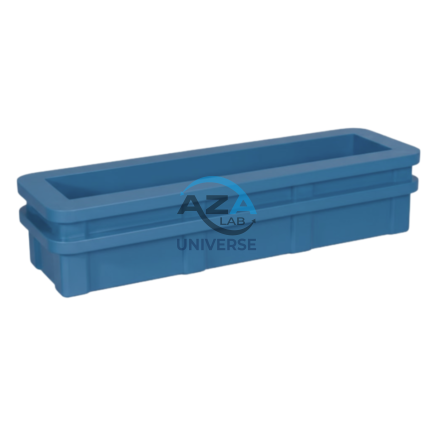
PLASTIC BEAM MOULD AZA1128
The Azalab AZA1128 Polyurethane Beam Mould Series is engineered for casting concrete beam specimens used in flexural strength tests. Built from high-impact, shock-absorbing polyurethane, these moulds deliver exceptional durability, dimensional accuracy, and ease of handling. Their lightweight yet robust design makes them suitable for both laboratory and field applications.
Polyurethane offers superior resilience compared to traditional metal or rigid plastic alternatives, enabling these moulds to withstand vibration, repeated use, and environmental exposure. The smooth internal finish ensures clean, damage-free demoulding, while the mould structure maintains consistency across multiple cycles.
Each AZA1128 mould complies with IS 516, ASTM C78, and BS 1881, ensuring reliable and standardized test preparation.
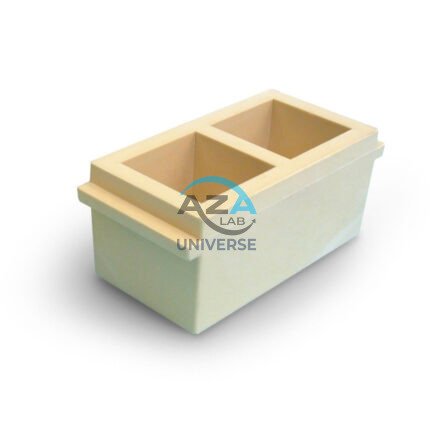
PLASTIC CUBE MOULD AZA1126
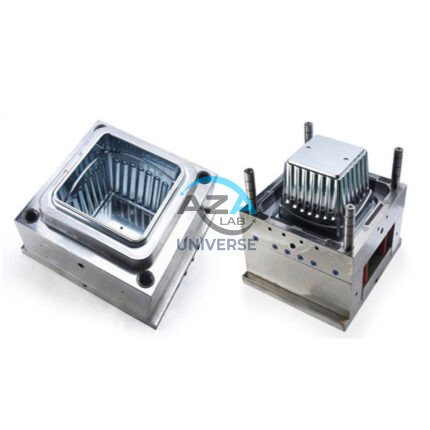
PLASTIC MOULDS AZA1125
The AZA1125 One-Piece Plastic Cube Mould (150 mm) from Azalab is a next-generation alternative to traditional metal cube moulds. Built from high-strength, non-deformable engineering plastic, this mould is designed to offer superior ease of use, long service life, and consistent dimensional accuracy for concrete compressive strength testing.
Its seamless, single-piece construction eliminates the need for bolts, screws, or external frames. Users simply apply demoulding oil, cast the concrete, and after curing, eject the cube using compressed air or water pressure, achieving clean and damage-free removal every time.
Compared to heavy metal moulds, the AZA1125 weighs nearly 90% less, providing clear advantages in portability, handling, and storage—making it ideal for both laboratory and on-site testing environments. Manufactured using an eco-friendly, non-polluting process, this mould supports sustainability goals in modern construction testing.

SLUMP CONE, PLASTIC AZA1103
AZA1103 Slump Cone (Plastic) is a durable and lightweight testing tool designed for accurate measurement of concrete workability and consistency. It is widely used in construction sites, civil engineering laboratories, and quality control departments for fast and reliable slump testing of fresh concrete mixes.
Unlike traditional metal cones, this model is manufactured from high-quality rigid plastic, making it corrosion-resistant, dent-proof, and highly suitable for repeated field and laboratory use. Its lightweight construction makes it easy to transport and ideal for site engineers and mobile testing teams.
The apparatus is manufactured to standard dimensions and fully complies with IS 1199 and ASTM C143, ensuring accurate and repeatable test results. The smooth internal surface minimizes friction, allowing easy release of concrete and improving measurement accuracy.
This slump cone helps engineers quickly determine if a concrete mix has the correct consistency for placement, compaction, and finishing. It is especially useful for quality checks before concrete pouring to avoid honeycombing, segregation, or improper flow.
AZA1103 is reusable, easy to clean, and requires minimal maintenance, making it a long-lasting and cost-effective solution for routine concrete testing.