
 Rock
Rock Aggregate
 Cement
 Concrete
 Soil
Soil Steel
Steel Bitumen/Asphalt
 Security Survey Equipment
 General Items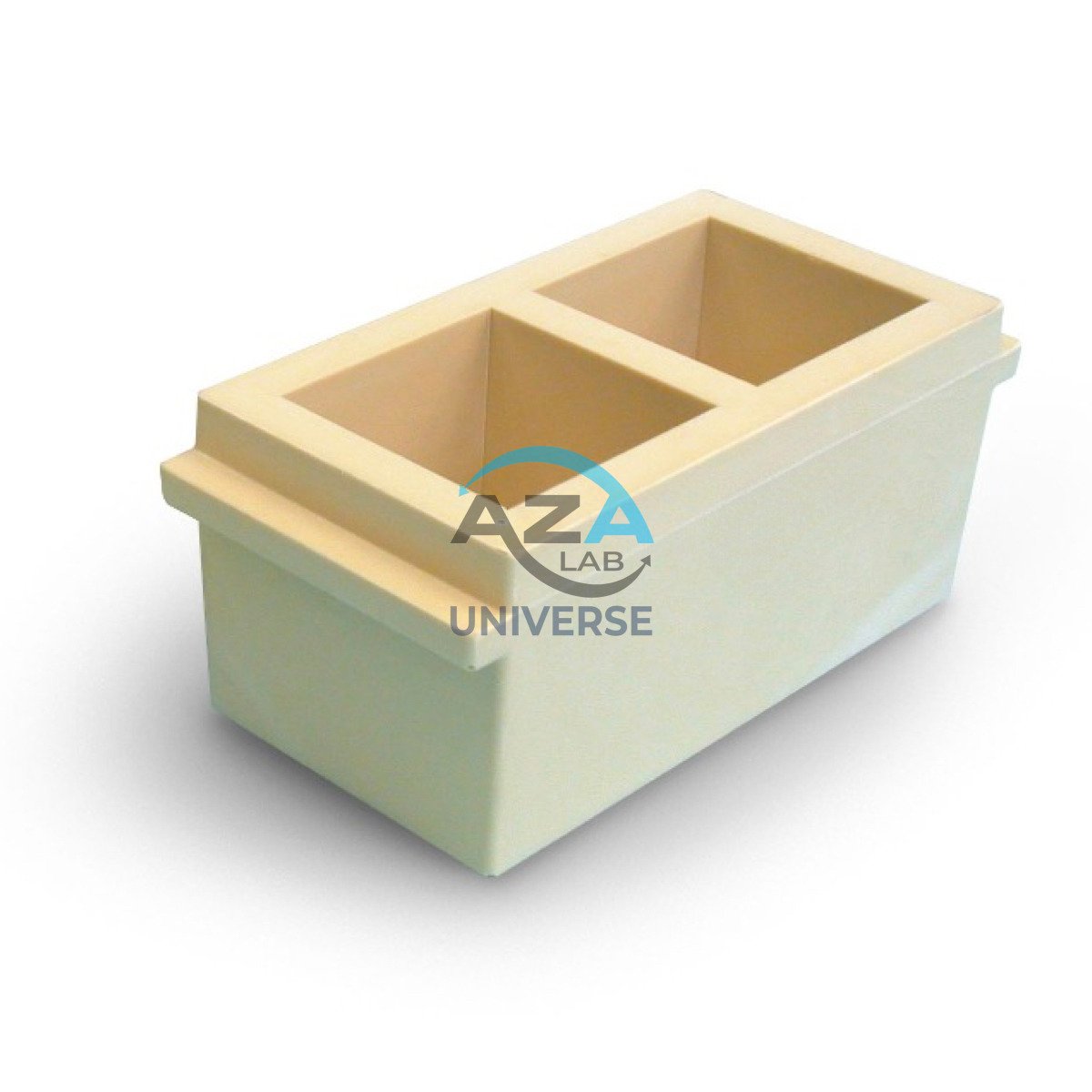
CUBE MOULD, PLASTIC AZA1155
The AZA-LAB Plastic Cube Mould (AZA1155) is a lightweight, durable, and reusable concrete mould engineered for casting standard 150 mm concrete cubes used in compressive strength testing. Built for both laboratory and field environments, this mould delivers dimensional accuracy, ease of handling, and long-term performance without the drawbacks associated with metal moulds.
Made from high-density, non-corrosive polymer, the mould resists rusting, denting, warping, and environmental degradation. It is specifically designed to perform reliably under harsh site conditions and repetitive laboratory use, making it an ideal choice for quality control operations in construction, research institutions, and material testing laboratories.
The mould comprises four interlocking sides and a solid base, ensuring stable assembly and sharp-edged cube formation. Its tight-fitting joints prevent slurry leakage during pouring and compaction, ensuring uniform specimen quality. Demoulding is effortless due to its smooth, non-stick internal surfaces—eliminating the need for excessive lubrication or hammering, and reducing the risk of damaging test specimens.
With minimal cleaning requirements and excellent resistance to cement buildup, the AZA1155 supports high-frequency testing workflows, whether at permanent laboratories or mobile field testing units.
The cube mould conforms to IS 516, BS 1881, and ASTM C39 requirements for concrete testing, ensuring compatibility with industry-standard quality control practices.
Description
Key Features
-
Standard 150 mm × 150 mm × 150 mm cube size
-
Robust high-density plastic construction
-
Lightweight and corrosion-free, ideal for field use
-
Smooth, non-stick interior for easy demoulding
-
Reusable design with minimal maintenance
-
Leak-proof interlocking assembly
-
Compatible with manual and vibrating compaction
-
Complies with IS, BS, and ASTM testing requirements
Technical Specifications
| Parameter | Value |
|---|---|
| Model No. | AZA1155 |
| Mould Type | Cube mould (plastic) |
| Internal Dimensions | 150 mm × 150 mm × 150 mm |
| Material | High-density durable plastic |
| Weight | Approx. 1.5–2.5 kg |
| Usage | Reusable; suitable for lab and site testing |
| Cleaning | Water-washable; smooth, non-stick surface |
| Standards Compliance | IS 516, BS 1881, ASTM C39 |
| Applications | Concrete compressive strength testing |
Applications
-
Casting concrete test cubes for compressive strength tests
-
Construction site quality control
-
Ready-mix plant laboratories
-
Academic and research laboratories
-
Mobile and field testing units
Available SKU
| Model No. | Description |
|---|---|
| AZA1155 | Plastic Cube Mould – 150 mm × 150 mm × 150 mm |
Frequently Asked Questions (FAQ)
Q1. What cube size does the mould produce?
A 150 mm × 150 mm × 150 mm standard concrete cube.
Q2. Is the mould reusable?
Yes. It is purpose-built for repeated use in both field and laboratory environments.
Q3. Does it require lubrication before use?
Not required. The smooth inner surface supports easy demoulding; a release agent may be used optionally.
Q4. How is the mould cleaned?
Simply rinse with water. The non-stick surface prevents cement buildup.
Q5. Can it be used on vibrating tables?
Yes. The AZA1155 is compatible with manual and vibratory compaction methods.
Additional information
| Mould Type |
Cube mould (plastic) |
|---|---|
| Internal Dimensions |
150 mm × 150 mm × 150 mm |
| Material |
High-density, durable plastic |
| Weight |
Lightweight (approx. 1.5–2.5 kg) |
You may also like…
Related products
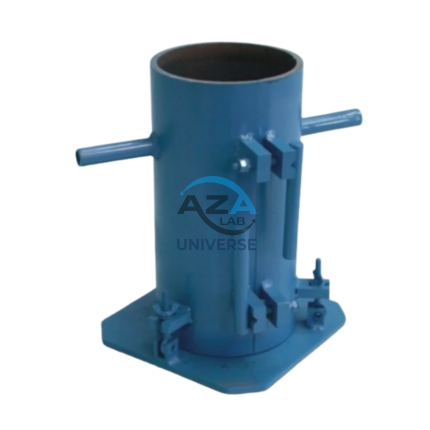
CYLINDRICAL MOULD AZA1123
Purpose & Function
The cylindrical mould is used to prepare concrete specimens of standard dimensions, typically:- 150 mm diameter × 300 mm height
- 100 mm diameter × 200 mm height
- Compressive strength tests
- Split tensile strength tests
- Elastic modulus evaluations
- Durability and material behavior studies
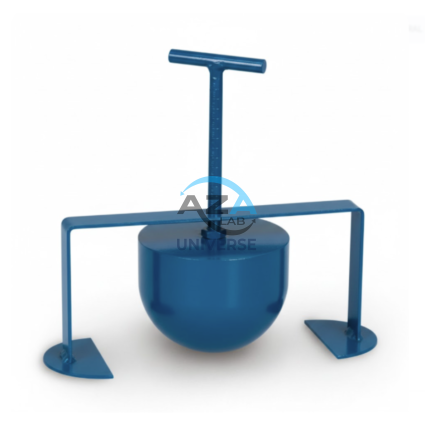
KELLEY BALL PENETRATION APPARATUS AZA1106
- Direct workability assessment using steel ball penetration
- Fully compliant with ASTM C360
- Portable and rugged for field and lab testing
- Heavy-duty steel/aluminum frame for long-term durability
- Built-in scale for accurate depth measurement
- Simple setup and low maintenance
- Provides a reliable alternative to the slump test
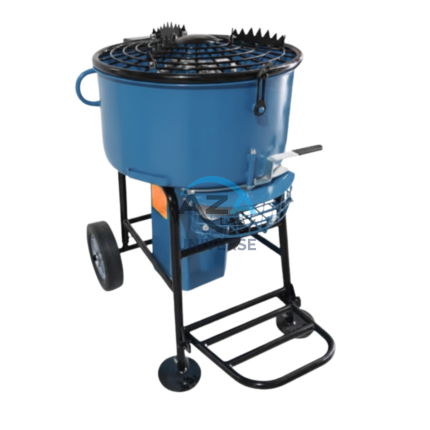
LABOMIX CONCRETE PAN MIXER AZA1118
The AZA1118 Labomix Concrete Pan Mixer is designed for demanding, high-volume mixing operations in construction laboratories, R&D facilities, and material testing centers. Built for durability and precision, it delivers consistent blends of concrete, mortar, grout, and aggregate mixes while supporting rigorous IS/ASTM test procedures.
Engineered with a high-efficiency gear-driven transmission, it provides stable torque, low maintenance requirements, and excellent mixing uniformity. The unit is available in multiple capacities from 90 litres to 300 litres, enabling users to select suitable volume for their operational needs.
The mixer features exchangeable mixing shovels, a safe-locking automatic discharge system, and large mobility wheels that allow a single operator to handle batching, mixing, and discharging efficiently.
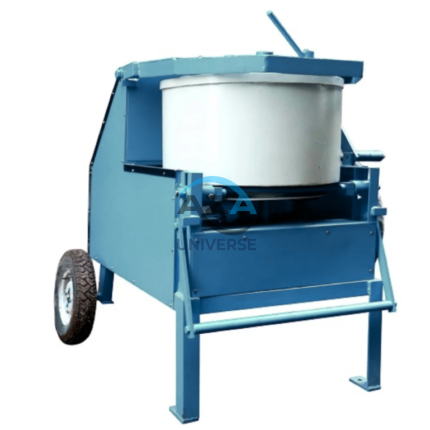
LABORATORY PAN MIXER (CAPACITY 40 LTRS) AZA1117
Key Features
- 40-litre mixing capacity ideal for cube specimen preparation
- Supports aggregate sizes up to 20 mm
- 2 HP motor, 960 RPM, 3-phase for heavy-duty mixing
- Adjustable steel blades for both dry and wet mix uniformity
- Portable design with wheels for easy movement
- Full-access drum lid for safe loading, pouring, and cleaning
- Gear-driven system for uniform, high-consistency mixing
- Easy maintenance and corrosion-resistant finish
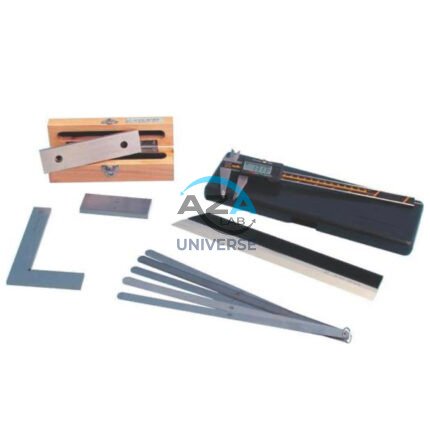
Mould Verification Kit – Precision QC Tool AZA1121
- Flatness of mould and specimen surfaces
- Straightness along mould edges and specimen sides
- Perpendicularity of internal walls and corners
- Dimensional accuracy (L × W × H, and diameter for cylinders)
- Go/No-Go tolerance checks for standardized cube mould sizes
- Surface deviation & gap measurement using feeler gauges
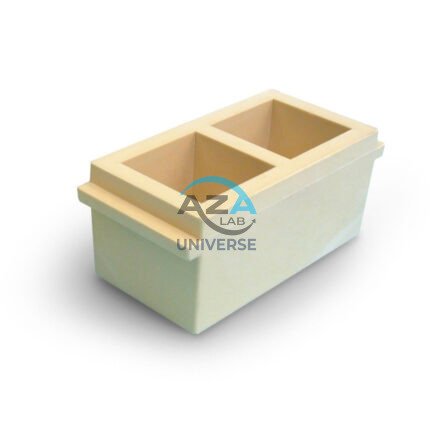
PLASTIC CUBE MOULD AZA1126
PLASTIC MOULDS AZA1125
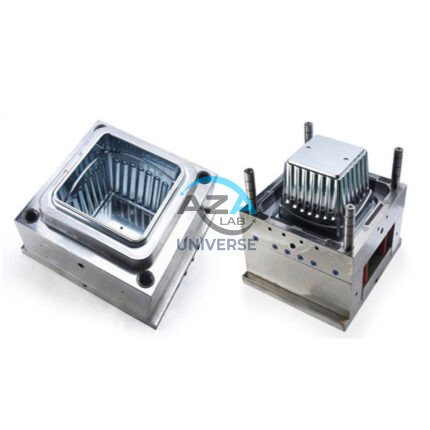
The AZA1125 One-Piece Plastic Cube Mould (150 mm) from Azalab is a next-generation alternative to traditional metal cube moulds. Built from high-strength, non-deformable engineering plastic, this mould is designed to offer superior ease of use, long service life, and consistent dimensional accuracy for concrete compressive strength testing.
Its seamless, single-piece construction eliminates the need for bolts, screws, or external frames. Users simply apply demoulding oil, cast the concrete, and after curing, eject the cube using compressed air or water pressure, achieving clean and damage-free removal every time.
Compared to heavy metal moulds, the AZA1125 weighs nearly 90% less, providing clear advantages in portability, handling, and storage—making it ideal for both laboratory and on-site testing environments. Manufactured using an eco-friendly, non-polluting process, this mould supports sustainability goals in modern construction testing.

V FUNNEL AZA1111
AZA1111 V Funnel is a precision laboratory apparatus designed to measure the flow time and viscosity of Self-Compacting Concrete (SCC). It evaluates how quickly fresh SCC passes through a narrow, V-shaped section under the action of gravity, providing critical insight into the concrete’s workability, stability, and resistance to segregation.
The V Funnel test is essential when designing SCC mixes that must flow through heavily reinforced or congested formwork. By recording the time taken for concrete to completely discharge from the funnel, the apparatus allows engineers and technicians to quickly judge whether a mix is too stiff, too viscous, or optimally balanced.
Manufactured with a durable, corrosion-resistant metal body and a precise quick-release gate mechanism, AZA1111 ensures smooth, repeatable testing. Its rigid structure and stable stand make it suitable for both laboratory and site-based quality control environments.
The equipment is designed in compliance with EN 12350-9 and EFNARC guidelines, ensuring globally accepted and repeatable test results